Hello there! I am a social philosopher, scholar, and author. Welcome to my social justice blog. I hope you enjoy, and please leave me engaging comments, and link me to your own blogs and publications. Cheers! :)
Love is about power and enchantment ‘extensionality’, between 2 trusting partners – as microcosmic even in networks of lovers as in polyamory, and making the world a better place as a function of that love and power 💓.
Here true love inherently exists to make the world a better place for itself, wherein there is no incongruence between making the world a better place for oneself, one’s partner(s) and the world at large (all sentient creatures).
Sklair has identified the transnational capitalist class as the new ruling class of the globe, loyal ‘only’ to international capital accumulation.
Its four fractions – corporate, state, technical and consumerist, serving the proliferating dominance of transnational corporations, has a heavy male-dominant bias. Since this ruling class has the most wealth compared with other people, it is responsible for a hefty ‘contribution’ to the gender pay-gap.
To redistribute wealth, to ordinary people, and to women, is a pressing social justice issue; this tiny elite extracts enormous amounts of surplus labour from workers and small businesses through more leveraged passive income generation, buying up the fruits of others’ labour on the cheap, from women and men alike, wherein they take no notice of women’s unpaid labour in reproducing paid workers.
A socialist movement needs to challenge this ruling elite for class and gender equity, as well as employing other methods to close the structural gender pay-gap.
Gender norms are still caught up in highly unequal, excessively dimorphic gender roles. Women are still seen as nurturers who do more household and emotional labour, whereas men are doing more physical and cognitive labour, at least in certain fields such as in construction, brick laying and ‘tradie’ work, and in medicine and engineering, and there is the glass ceiling in the higher levels of the legal profession. Women tend to dominate carer roles which are less well paid than the male dominant arenas.
Interestingly, gender studies is currently female dominant, which, at this point, is understandable given feminism’s and pro-feminism’s current power-base. Certainly, trends in masculinist organisation have lacked comprehensive engagement with gender as a historical and present day multi-disciplinary enquiry and reproduce overly reactionary gender politics and tend to be wholly dismissive, as cursory, of feminist philosophy. This has been unfortunate. Female dominant sectors of society and education are viewed by some as a ‘corrective’ to male dominance in many fields. However, I proffer the only stable and sustainable solution to gendered dominant practices is to institute extensive and expansive “50/50” gender quotas (inclusive of trans men and trans women): in vocation, profession, and university specialisation and fields of educative institutional study. This will correct gender identity deficits and prevent the genders from competing against each other.
This would correct the negative and unnecessarily unequal gender role socialisations. Gendered identity would be forced to change in the realm of being equal breadwinners. Other differences such as in fashion, for instance, may remain, although subverting these kinds of differences should not be met with disapproval or social exclusion. Freedom in the realm of identity and expression must be defended.
I feel the counter-arguments to the gender quotas are weak, as quotas are the only truly foolproof method of correcting gender role sub-optimality socialisation.
Some feminists and masculine pro-feminists have submitted that until we treat women and men more equally in a substantive sense, we will not likely be able to discern their true differences. For example, Mill, in 1869, stated:
“Until we treat men and women the same socially then we have no way of telling what natural differences there may be between them”1.
I tend to disagree, as we have scientific study of biological difference, e.g. of brain and cognitive functions. I would concede, however, that we be careful about how we attach meaning to those differences socially, in our practices and praxis. I believe that there are stark biological and biosocial differences between the genders, but it is a non-sequitur that we should not further equalise gender roles, and thus we eschew crude biological determinism. One key difference is in greater brain proclivity for empathy in women (larger and more active anterior cingulate gyrus theory); this would be no rationale to pay women less nor to retain female and male dominant fields and the lingering pay-gap thereof. I would like to conclude that it is a genuine socialist mandate (‘teleological target’) that individuals in all the fields of work should substantially be paid the same wage, outmoding and overcoming the corporate division of labour and its economic and workplace inequality.
A source of pride and not shame for one’s nation is what national celebrations are all about. Of course there were massacre atrocities committed in the name of Australia and by colonizers, and violent cultural clashes between Indigenous groups and colonizers. And the way to deal with this is through collective responsibility1 and making material redress for these atrocities through ameliorating racial and ethnic disadvantage at the level of the state, even though largely today’s Caucasian Australians did not themselves commit these atrocities. Regarding national days of celebration, in and of themselves, there is no issue with celebrating the shared nation in which we co-inhabit regardless of race or ethnicity.
Whilst the Indigenous population was not politically organized into a modern day nation-state, the claim of Terra Nullius (’empty land’) was an erroneous legal fiction, as the High Court of Australia has subsequently found and reflects this truism that the continent was already occupied by an Indigenous population/populace, or more precisely – Indigenous populations (known as Mobs). Thus, whilst I totally understand where many Indigenous peoples, and many White socialists and liberals have been and are using the term First Nations1, I would like to propose the term First Peoples may, at times, be appropriate. This does not change nor negate the historical need for consensual biracial land-sharing of the continent in forging and negotiating treaties with each landed-language-unit of Indigenous territory upon the continent. This should have happened upon the arrival and landing of British peoples upon the continent, with first contact with each Mob (tribal unit).
For Australia, there is a very pressing need for a National Indigenous Day. I will also address the call for changing Australia Day to an allegedly more sensitive date such as January the 1st, the day when the Commonwealth was formed in 1901. January 26th 1788 is an important date for Caucasian Australians with the First Fleet docking at the Sydney Cove. Despairingly, there was the massacre of some Gamilaroi people also on January 26, but later on in 1838. Massacres of Indigenous peoples (6 or more deaths from violence) and violent clashes resulting in deaths of Indigenous people and Caucasian colonizers continued from 1781 to 1928 with violent Indigenous deaths far outnumbering violent deaths of Caucasian colonizers. This was due to an erroneous imperial and racial supremacist ideology of many colonizers along with the yielding of ‘technologically advanced’ weaponry such as muskets and other firearms. Furthermore, the forcible removal of Indigenous children from their families (the stolen generation) continued from 1910 – 1970s, as well as other brainlessly stupefying indignities such as slavery or indentured labour on cattle and sheep stations, in kitchens, homesteads shearing sheds or on the land between 1860s and the 1970s, and the withholding and denying of suffrage rights until 1984. In acknowledgement of an initial mistreatment of many Indigenous peoples, which is unfortunately still ongoing in some respects, many peoples, particularly many left-leaning liberals and socialists, recommend a date which is ‘historically neutral’ and or even ‘historically arbitrary’ for Australia Day, as preferable to January 26th. Instead of tearing down culture, which is connected with racial identity of Caucasian Australians, we should focus on doing things positive, that is to create in inaugurating a National Indigenous Day. I propose that this is a solution or going a long way to resolving or redressing the racial and cultural historical and present-day social and political contradictions. That way the day important particularly to White Australians, but also to all Aussies, could remain on the 26th as the day the continent was discovered by White people intending to establish a modern-day nation state, i.e. Australia.
The consent to racially co-inhabit the ‘Australian’ continent from Indigenous groups was lacking, perhaps partially because Aboriginal tribes were not united in a centralized political state – however this fact does not excuse nor vindicate colonizers’ actions. For the British who arrived on the continent’s shores, acting in good faith would have constituted the forging and negotiating of treaties with each of the territorial units of Indigenous First Peoples. Ergo the Aboriginal Indigenous identity should at least comprise the level of their population pre-existing Caucasian ‘settlement’, along with deploying other comprehensive social justice measures. This is to protect against ethnic cleansing. This population has been estimated to be somewhere in the vicinity of 3 million or more people.
The achievements of the Australian nation and all its peoples could be then celebrated on the 26th January. And our First Peoples, and their racial and cultural heritages, could be specifically celebrated on a date equally as important to all Australians, with a specific view to both memorialize and reproduce these heritages. This may be fitting with the post-colonial era in which we live? We need to actively show we take the well-being of Indigenous Peoples seriously, through careful community engagement, and political action(s). Their voices should not be quashed, and we need to stand up for First Peoples, and not attempt to silence them just because they are a minority group living in Australia today. They got here first, or they will say they always lived here. This gives the rationale for Land and Native Title Rights, as well as, of course, protected Indigenous heritage listed sites.
The Whites who migrated to Australia, at first contact with Indigenous peoples, founding a nation-state on the continent, were a large-scale agricultural and preliminary industrial racial and cultural population. Naturally as flow-on from this their racial and cultural identity was melded with a higher population than hunter-gather society. This is not a corollary that Whites were/are superior, just radically different. This gives rise to racially informed political-populations. Thus an ‘Anglo’ nation-state should co-exist with original Indigenous territories, with co-governance(s). The White population in Australia, and non-White persons who have migrated to Australia on the terms of the Australian nation-state, begun as (large-scale) agriculturalist and preliminary industrialist, no fully fledged industrialism. Three University of South Australia academics hold that 15 million people is a sustainable population for Australia. This means that non-Indigenous persons could reasonably be around 12 million based on this line of reasoning. Indigenous peoples on the continent may never have become large-scale agriculturalists and industrialists without White contact. But they were not living in primitive communism. Rather, they were efficient resource managers.
Non-Indigenous Australians may have been born here or immigrated here, and we should embrace a level of multiculturalism, plurality and tolerance, whilst preserving the autonomy of the ancient Indigenous culture(s) and the European descent culture(s), giving a strong bi-racial and so-called ‘mixed-race’ Indigenous-Caucasian (who embody both heritages) foundation integral to Australian identity, as well as a limited, but in good faith, new racial and cultural identities brought to Australian shores from people who are disadvantaged, hailing from geopolitically subordinated nationalities. This should happen with a level of memetic contagion to solicit a ‘rational cultural synthesis’ between the cultures, taking the best aspects of each and combining them to achieve what Nietzsche called the Super-Person (Übermensch)’; naturally, this happens internationally too, through globalizing technologies such as the internet.
Cultures inevitably intermix. All have their respective virtues and the point is to study them intricately to not only preserve cultural integrity and heritage, but to elicit cultural diversity and combining their best features too.
Indigenous cultures are more egalitarian, with greater social inclusivity, have an effective environmental ethic infused with their spirituality, and enjoyed a better work-life balance. These are awesome progressive traits that the liberal capitalist culture refuses to acknowledge in politically progressive enactment detracting from its authenticity.
What we need is for better self-governance of Indigenous Peoples (reflected in their U.N. right to self-determination), and socialist participatory norms for more direct economic and social decision-making for the Australian populace at large including Indigenous Peoples.
We should note that the name Australia for the nation state, and the national flag, are both colonial artefacts, which should be outgrown and surpassed in favour of a hybrid name and hybrid flag. Indigenous peoples could agree upon a name for the continent, through assembly organising, which could be hyphenated with the Anglo term Australia, appearing before and hyphenated with the term Australia. Non-Indigenous peoples, should also be careful of not over-breeding on traditional land if at the expense of ethnically cleansing Indigenous population(s), as this is certainly an insidious (neo)colonizing (ethnic cleansing) process. The Indigenous have and had really-existing knowledge of sustainable population; whilst I believe in some, more minimalist, form of industrial activity with a decrease in population to live in accord with the carrying capacity of the earth, we are yet to prove this can work in a really-existing political practice and praxis: really-existing feasibility is yet to be established, unlike the really-existing and politically proven Indigenous environmental ethic, which is also ancient in character.
A provisional idea for a hybrid flag is given below. My editing skills are quite poor, and intend to ameliorate the below flag so the Torrens Strait Islander Flag is the same size as the Union Jack. Also, the Kangaroo is not properly centered. Since we in Australia read from left to right, the Indigenous flag appears on the left congruent with the preoccupation of the continent of the Indigenous before the British colonial phenomenon – a spatial recognition of the temporal pre-occupation of the continent by the Indigenous before subsequent British Caucasian ‘migration’ (in establishing a nation-state). The flag also features a native Indigenous animal (the Kangaroo) with boxing gloves (a form of human technology). Your constrictive feedback and how it may be changed for this idea for a new national flag is welcomed.
As aforementioned and signposted above, another important avenue for social justice is the forging of treaties. The paramount exigencies for treaty-making exist. These should be between state governments and Indigenous traditional territories that are enclosed (or substantially enclosed) within these state government jurisdictions. Further, a treaty between all the Indigenous territories and peoples and the Commonwealth of Australia is pressing. The traditional Indigenous territories – comprising landed and sea political, language/dialect-variation, racial and ethnic units – never ceded their sovereign rights of the landed and sea political, language, racial and ethnic units. Furthermore, these traditional territories, before the arrival of British ‘settlers’ were subject to a form of native and traditional governance, albeit radically different from modernist European conceptions of governance and stewardship, however, no less legitimate nor inferior.
Inherent in the ideological positionings of this blog entry, is the political moralization of the nation-state. I believe the territorial nation-state system acts as bounding cultural, ethnic and racial identities, promoting diversity and belonging within large-scale social and economic complexity, and importantly acting as a break on centralised world-government. These, to be authentic, must become sites of proletariat power. See my blog post ‘Against Abolishing Nation-States as the Authentic Sites of Proletariat Power’: https://henrywilloughbyssocialjusticeblog.com/2020/10/17/against-abolishing-nation-states-as-the-authentic-sites-of-proletariat-power/
Another idea for a social justice mandate could be the enactment of the original Indigenous territories within the continent organized into a fourth tier of government negotiating political power(s) and practice(s) with local, state and national political power(s) and practice(s). These political units could be termed ‘Elders’ Councils’. I would personally like to see Indigenous women socially inducted as Elders along with Indigenous men. However, this is a decision for the Indigenous peoples on the continent. This fourth tier of government could be the subject of treaty negotiations to ‘reinstate’ the autonomous traditional territories which never ceded their sovereignty/sovereignties.
We, in Australia, could also be even more radically nationalist by becoming a republic, with acknowledgement of ‘the British colonial experience’ as an important part of European identity to White people. In point regarding the movement to become a republic nation-state, on the imperatives for Australian nationalism we should note in quoting Dr. James Saleam:
“Some of the colonial history is important to us. In the same way a genuine American would have some reverence for the genuine aspects to the British colonial experience. If you are a genuine Argentinian nationalist, you’d have some respect for the Spanish colonial experience. We Australians have to have some respect for the British colonial experience. Many things that were transferred to Australia became a part of the gestation pool for whom we later became.”
Similarly, instead of the reactionary idea of tearing down, damaging or defacing colonial artefacts and monuments, which is culturally destructive, racially and culturally disrespectful and morally reprehensible, we should do things positive and build statues and monuments of Indigenous peoples and their culture(s).
Additional ideas and feedback for comprehensive justice for Indigenous peoples, Caucasian / European-descent Australians, and all Australians, as equal national stakeholders, is welcomed.
What we need is collective responsibility, not collective apology of/from all White people or all Australians. Individuals apologising or the state apologising on the part of individuals who have not themselves perpetrated wrongdoings against Indigenous Australians just creates more race-hate and collective low self-esteem. It is material redress for historical exploitation, closing the gap of structural racial and cultural disadvantage, and restoring rightful Indigenous territorial governance(s); these are not mutually exclusive areas of/for redress. ↩︎
Whilst I do like to use the term First Nations (Peoples) in some contexts, at times it may be projecting onto Indigenous peoples and their ancient territories a phenomenon conceptualised in a non hunter-gatherer society. The modern day nation was a subsequent political invention – subsequent to Indigenous tribal territorial governance. Of conceptual importance is that this Indigenous governance(s) is/are not inferior to the modern day nation as it now stands. Both should survive in a progressive synthesis. ↩︎
Would it help with Australian foreign policy if we weren’t automatically obligated (by the ANZUS treaty) to send troops into the Middle East and instead pursue armed neutrality?
Armed neutrality is military preparedness without commitment, with readiness to counter with force an invasion of rights by any belligerent power.
There is the need for both nationalist and internationalist solidarity, particularly showing solidarity to exploited workers at home and abroad. A strong nationalist-internationalist movement could lead to substantial universal demilitarisation. This should be the overarching priority, and is the ideal situation. But, say, if a proletariat party won an election in Australia, armed neutrality, which would include nuclear armament1, would definitely be a positive outcome.
Also opposing war by masses of ordinary people around the world hasn’t stopped the Middle Eastern wars. What is the most needed is international (in each nation state) workers organisations and social justice political parties to change dominant capitalist institutions. Then the people will determine foreign policy, not politicians who serve the capitalist state (above the masses of ordinary people)!
See Dr. Saleam herein discuss eloquently on the potential and exigency for armed neutrality in Australia, inter alia other political ideas of Dr. Saleam’s as Party Leader of Australia First. Caveat: other ideas outside of the narrow nationalist concept of armed neutrality enunciated are the speakers own, and not a precise reflection of my own (as author of this blog-post); I believe armed neutrality is entirely politically necessary for all nations, not just Australia, to break with the hegemony or imperialism of super-power politics and their geopolitical allegiances.
Once all nation-states have been captured by nationally-sited proletariats, then we can not only purse nuclear disarmament(s), but demilitarization(s) too. In the long-run, in this manner, military spending is economically and environmentally wasteful.
Whilst in the long-term I am passionately for synchronous internationalist nuclear disarmament, I believe in the short-term benefits of militarily weaker nation states becoming nuclear powers to act as a break the super-power politics of intimidating non super-power nations and the ensuing phenomenon of satellite states as a result of this geopolitical intimidation. Whilst I have some reservations of excessively theocratic states becoming nuclear powers, supporting the need for these states to enact separation of church and state in governance architecture is also concurrently dire. See my analysis on how the Ukraine war might have been avoided through Ukraine becoming a nuclear power (or if it had become a NATO member country not just a NATO partner): https://henrywilloughbyssocialjusticeblog.com/2022/11/09/an-abyssal-tragedy-of-war-in-ukraine-some-lessons-to-heed/. ↩︎
Sharing the empowering and disempowering labour in the workplace through job rotations is the most exhaustive way to eliminate coordinator or managerial specialisation class divisions. Michael Albert has detailed the intricate workings of such post-capitalist workplaces.
I think the most seamless and successful route to participatory workplaces could be a transition to market socialism through first implementing humble profit-sharing for employees.
Market socialism implies, for me, sharing profits of a business with its workers who become ‘co-owners’.
Full blown socialism would only be feasible with the separation of powers at the federal and state levels in the country implementing socialist measures. Remuneration in some ways would have to be authenticated by the state which would reflect more decentralized representative and direct democratic designs. Workplaces would be given a budget determined by directly democratic voting, and workers’ councils could determine fair rates of pay and ensure the workplaces were truly participatory and rotational in terms of the cognitive and menial labour performed.
So market socialism could be skipped, but this would entail radical union and workers’ committees organisations embodying the correct principles of workers’ participation in democratic workplaces, including voting on decisions to the degree to which a worker is affected, and the sharing of empowering cognitive labour.
At times I lean towards market socialism as a transition to for more full blown socialism as this may be more a seamless transition to a social post-capitalist society. However, creating the organs of a new participatory economy in the form of strengthening and streamlining workers’ organisations is just as pressing as implementing profit sharing and market socialist reforms at the level of the state within the currently existing liberal capitalist institutional framework is absolutely imperative too. I support both measures, as both are genuinely progressive.
Once market socialism is achieved, a different social relationship to the productive means may seem all the more achievable from that vantage point.
On these matters I am a genuinely concerned individual. This is why I have some extensively written conceptions, moving forward.
We need to have an open and extensive discussion on, discerning and evaluating matters pertaining to sexual impropriety, to address them head-on, and thus make social and political traction and progress thereon. It is incumbent upon all adults, young adults and teenagers to get their heads around appropriate intimate and sexual behaviour(s).
For the need to evolve to an unequivocal, nuanced and comprehensive verbal intimate/sexual consent model, please see below:
In more specifically addressing the title of this blog post head-on: some feminists allege we have a ‘rape culture’. I don’t think this is fair, but there is certainly sexual dis-etiquette (neologism for a lack of sexual etiquette) on the part of probably the vast majority of males and men at some point in their lives (typically at a younger-age and without adequate sex education).
The case of Julian Assange is in point. To my knowledge, he had unprotected sex with a woman wherein she had earlier communicated to him that she wanted him to wear a condom. She alleges he ignored her request and penetrated her anyway, without wearing a condom, sometime in the morning after having protected consensual intercourse the night before. She had consented to some level of sexual activity earlier, but the higher and more nuanced level of consent was missing when he penetrated her in the morning without wearing a condom. I allege that this is not rape, as the force, fear and intimidation components1 required for an objective finding of rape were missing. This is likely a high degree of sexual dis-etiquette (not rape). Many commentators in supporting Assange hold that this – choosing to prosecute for rape – may have been *at least partially* politically motivated.
A judicial finding of rape in the Assange case would not only be erroneous, but a criminal conviction of rape and its punishment would be grossly disproportionate to the harm inflicted by Assange on the woman by the sexual dis-etiquette. We see that even with the retributive form of ‘justice’, which we shouldn’t condone nor practice in the case of sexual dis-etiquette, a criminal record for rape, and its ensuing imprisonment time, destroys the life a person so afflicted, whereas being victim to sexual dis-etiquette does not. So, it is not a proportionate form of retribution.
Men intuitively understand rape as using force, fear and intimidation with the physical overbearing of a woman (or person) to penetrate a woman (or person) and sustain penetration in spite of her (or their) overt physical and/or verbal protests seen as annulling consent – physically overpowering another person to sustain penetration. Physically overpowering another to elicit (not sustain) penetration would qualify as sexual assault.
However, we need better and more comprehensive sex and consent education to (particularly) teach males and men to act with better sexual etiquette, at an age just before they may become sexually active, to successfully annul sexual dis-etiquette culture.
Back to Assange’s case-study, he should not be found guilty of rape as he did not physically overbear her to sustain penetration – not using male athletic power to subdue her. To reiterate – the only remedy for sexual dis-etiquette culture is better (sex and consent) education in schools from a young age. See, for an Australian case-study on consent in sex education for school attending teenagers:
Further adding to sexual dis-etiquette culture, is the liberal consumption of hardcore pornography, which can train for unreasonable sexual expectations which, without offsetting with sophisticated and comprehensive consent education, lead to various, and a whole plethora of, different kinds of sexual dis-etiquette. Further on pornography and its influence on culture, please see:
People should be encouraged and trained to negotiate verbally, prior to sexual activity, what sex-acts and styles of sexual expression a person would feel comfortable with before the differing stages of intimate or sexual activity at any given point in time.
We should acknowledge that male sexual dis-etiquette is very hurtful to women, however, it should not engender a finding of criminality. The legal definition of rape, most apt, appropriate and socially just, is the Californian statutory model2 as ‘sexual intercourse without consent’ wherein “[r]ape requires force, fear of other intimidation in order to complete the act of sexual intercourse” (https://www.wksexcrimes.com/difference-statutory-rape-rape-california/). We should have a legal, or at least social, definition and understanding of sexual dis-etiquette which would deal with a nuanced conception(s) of consent as on a continuum as a layered contextual process and where consent is viewed as mutually and dialectically negotiated between agents and sustained by them throughout sexual acts – with kinesic and/or verbal cues. This will show us where the higher levels of consent become obfuscated in cases of sexual dis-etiquette, without the force, fear and intimidation components to sustain sexual intercourse (needed for a finding of rape) which annuls consent altogether. What’s the alternative – to imprison, say, 80% of the male sex class, objectively guilty not of indecent assault, sexual assault and rape, but of the non-criminal sexual dis-etiquette, who have been consuming hardcore pornography from a young age, and without comprehensive consent training? That is socially and politically ridiculous.
The intuitive understanding of rape, in a large proportion of men’s minds, is typically conceived (without being trained in the higher levels of consent from a young age and through liberally consuming hardcore pornography) as using male athletic power to subdue – forcing penetration and sustained penetration in spite of overt physical and/or verbal protests by another person or subduing and the taking away of sexual agency of another altogether (e.g. tying a person up without their consent and then penetrating them). This is typically objectively rape (no consent) when there is no build-up in intimate exchange preceding the intercourse. This is in general accordance with the legal definition of rape, canvased above, requiring force, fear and intimidation instilled in the victim(s) by the perpetrator(s). In contrast, consensual intercourse typically proceeds from a build-up in intimate exchange, prior to the intercourse – kinesic sexual negotiation between two (or more) people. This build-up tends to select for consent, but each sexual act or progression is (sexually) negotiated and consent can be terminated by either party – either declining/repudiating a particular kind of sexual activity or declining all sexual activity altogether – at any time in or at any level of sexual change. Regrettably and shamefully, there is the rather commonplace and typical dis-etiquette of males ignoring a verbal request not to penetrate without using an overbearing or restraining force subduing the woman. Her communicating that she does not want a particular kind of activity and the man trying to anyway despite this communication, is a high degree of sexual dis-etiquette (without the force, fear and intimidation that would constitute rape). Her voiced and express verbal wish(es) are seen as a threatening radical negativity to male reason, that the man knows what is best for her, that she is incapable of reasoning in sex, and that she might secretly desire the sex-act she has declined. This is a repugnant social affliction in urgent need of redress: women reason in sex and have agency.
There is a spectrum of harmful male sexual behaviours towards women: from the differing degrees of sexual dis-etiquette in harm done, to the differing degrees of indecent assault in harm done, to the differing degrees of sexual assault in harm done, to the differing degrees of rape in harm done.
Rape of a woman is so damaging as it is an attempt at annulling her socially-symbolic reproductive strategy and power. Similarly, sexual and reproductive cuckolding, are aimed at subjugating a person’s socio-symbolic reproductive strategy (sexual cuckolding) and genetic-biological reproductive strategy and autonomy (reproductive cuckolding), respectively. Related to this are the gender sexual politics of the sexual penetration of heterosexual males and men, for a blog post thereon, see:
Furthermore, males and men are taught to ‘over-sex’ and to pursue ejaculatory forms of sex with fertile women when he may not want to reproduce with her. For a much needed sobering examination of legitimate reproductive power of males/men see:
The objective test for rape should be the forceful and overbearing use of athletic/physical power to instill fear and intimidation in the victim in order to sustain penetration despite the overt physical and/or overt verbal protests of the victim. Courts should rally around this objective test and objectivist distinction, whilst working to rehabilitate and give redress to victims through restorative forms of justice for sexual dis-etiquette, retributive forms of justice and punishment(s) for serious sexual violations such as indecent assault, sexual assault, and rape. The subjective mens rea test of intention to rape should also remain a factor in investigating whether there is a judicial finding of rape.
Anti-carceral feminism holds that we find other more productive ways of eliminating sexual objectification and harm, and this I proffer, re sexual dis-etiquette, is the humane and constructive way forward. It is not that the vast majority of males and men do not want to eliminate sexual dis-etiquette *and its ensuing sexual dis-etiquette culture* – it’s that they have not been taught how in a comprehensive fashion from a young age (before becoming sexually active). Taco and milkshake ‘ads’/campaigns are not sufficient and are an insult to a young teenager’s capacity for prowess in consensual sex without dis-etiquette!!
Particularly males need to ensure they do not penetrate another whilst that other person is asleep. Just because they had consented to sex previously (say a couple of hours before falling sleep), even if they are in the same bed, does not mean they are entitled to penetration whilst the other is sleeping. This particular scenario is a form of sexual dis-etiquette, and also qualifies as unwanted sexual behaviour and is very common (rife even). Women also need to understand that if they manually put a man’s penis inside their body, whilst the man is asleep – say vaginally or orally – that this is a form of sexual dis-etiquette and is unwantedsexual behaviour. And, fondling a man’s penis whilst he is asleep is also a form of sexual dis-etiquette. These three scenarios are currently commonplace – particularly in cases where there has been a proximate temporal consensual sexual exchange before in bed together where their partner has fallen asleep (which tends to mitigate the severity of the dis-etiquette, but still qualifies as unwanted). It is more common for males to do this to females, mainly because the differences in socialisation of courting rituals, where there is the expectation on males to instigate and solicit a sexual exchange. In these instances, the overbearing physical force is absent, so it does not qualify as rape (sustained penetration through physical overbearing despite overt protests of the victim) nor sexual assault (penetration through physical overbearing despite overt protests of the victim). I would suggest that this rather high degree of sexual dis-etiquette in penetrating another whilst they are asleep or putting a penis inside a person’s body whilst that man/male is asleep or fondling another person’s genitalia whilst they are asleep, also qualifies as unwanted sexual behaviour.
Sexual dis-etiquette is indeed a very serious problem in need of holistic rectification.
Let us also discuss a working definition of indecent assault. This is a more serious wrongdoing than sexual dis-etiquette. It occurs through sexual groping of a person’s private parts – i.e. where there has been no consensual build-up of intimate/sexual exchanges, nor a temporally proximate consensual intimate exchange, and not within a pre-existing and established intimate/sexual relationship.
I would also like to point out the unfortunate phenomenon that there is also bodily dis-etiquette – destabilizing a patient’s bodily autonomy, and even on occasion – unwanted penetration of a patient in medical practice. We should acknowledge the inherent power imbalance between a treating doctor and a patient, and thus proceed cautiously to deliver high standards of consent in medical practice/praxis. Doctors should expressly ask for written (or at least verbal) consent before touching a patient’s genitals or private parts or before vaginally or anally penetrating a patient in order to perform a medically sought function, operation or procedure. This unwanted penetration (no consent) approaches borderline indecent assault as there is no consensual intimate build-up immediately prior to penetration as there is in courting rituals outside of medicine/medical practice. However, it falls short of, and does not constitute, indecent assault, as there exists a medical reason for penetration. However, it does qualify as unwanted bodily dis-etiquette. Our medical practitioners need to be similarly trained in consent to touching genitalia or private parts of patients, and trained in consent to penetration of patients, in adherence to, and congruent with, the (do no) harm principle – nonmaleficence.
A sideways note on binge drinking culture: unfortunately binge drinking culture entails non-consensual sex on a mass scale, since a person or persons cannot consent whilst intoxicated. This is a highly regressive social practice, which we should and would do well to completely overthrow!
We should not seek retribution for dis-etiquette sexual or bodily wrongdoings, but instead pursue restorative forms of justice such as mandating sincere written apologies from perpetrators to victims; in the case of indecent assaults and the even more serious wrongdoings of sexual assault and rape, we should seek punishment to dis-embolden other potentially predatory people who have irrevocably chosen their quest to power through a Manichean-evil subordination of others. We should also encourage apologizing, in social accountability, for acts of sexual dis-etiquette.
These are a nuanced, yet non-exhaustive, philosophy of sexual impropriety, around which legal principles need be scaffolded and applied.
There are many more forms of sexual dis-etiquette and sexual exploitation, not canvased here. I deal with these in other blog posts and in my published books. I have written extensively on pornography (real and virtual), sexual surveillance, BDSM, kink, the contextual virtues of both softcore and hardcore sex, the sexual permissiveness of liberal hedonism, love-making and true love intimacy for couples and micro-monogamy in polyamory3, the issue of consenting to harm in sex, sexual false consciousness, virtues of monogamous and restrained polyamorous intimate/sexual relationships, and the different stages of and sustaining real intimate exchange for couples/partners. An engagement with and dialectics between different forms of feminisms and masculinisms have assisted me greatly in my quest for meaningful synthesis regarding a healthy intimacy and (healthy) sexual relations (in relationships).
In my blog and in my published books, somewhat related to impropriety in sex, I also critically engage with the ancient dimorphic reproductive strategies of men and women, a source of much (horrendous and abyssal really) gender tension(s), their now more socio-symbolic forms, and how to reconcile these differences, in cooperative good faith.
In concluding, I would like to draw your attention to a very troubling matter, see my blog post on covert paedophilia:
It means, disturbingly, there are many covert pedophiles, particularly intra-familial pedophiles, walking scot-free, among us. Pedophilia is a form of rape, as the victims, here with babies without conscious memory formation, cannot give their consent due to their age.
Let’s talk about philosophy, well philosophers to be more precise.
Who are your favourites?
Of the ones currently well known, my favourites are Marx and Nietzsche. They may seem diametrically opposed on many issues, but they tend to balance each other out when one assesses their main points.
Let’s discuss Marx’s virtues and oversights first. Marx provided a teleological meta-narrative of social justice culminating in his Communist Manifesto, co-authored with his comrade Engels. His best idea is vying for real change in world (not just philosophical interpretation), through edifying a left/social justice political party based on the praxis of social and political emancipation. These sentiments are highly relevant and virtuous. His oversights include the aim of the possible dissolution of the nuclear family (families with two parents), and an end of history, arguably without leaving room for ongoing social evolution.
Let’s now discuss Nietzsche’s virtues and oversights. I love Nietzsche’s aphoristic style and his desire to ‘philosophize with a hammer’, against uncritical idolization in society. Unlike Marx, Nietzsche withdrew from politics and didn’t help to craft how we could emancipate ourselves in politics and political institutions. Nietzsche only expressed anti-socialist sentiments and was an anti anti-Semite. Nietzsche on gender is a troubling question. Against the current homogenizing aspects to gendered thought on women and men, Nietzsche attempted to ‘philosophize with a hammer’ on gender. I disagree that emancipating women and men women would entail segregated gender roles where women would labour in the home and men in the job/employment marketplace. What I like about Nietzsche’s gender politics, is leaving room for men and women to be different and enjoy their differences together. Nietzsche pointed to immutable gender tensions between women and men, when the point is to continually mitigate these tensions, through better gendered practice and praxis, in everyday life and in institutions. Nietzsche lacked a structural gender analysis. He was a product of the times in many ways, yet not entirely nugatory. He was certainly wrong that women were the weaker sex (or was this merely a brand of quasi-transient subjectivist gender knowledge/formulation, with Nietzsche’s post-modern prerogative of understanding or experiencing truth on one’s own terms?). Women have displayed greater empathic virtues, have faster brain pruning and maturation, the ability to carry their own offspring and the consequent annulling of maternal angst, reproductive power, and aesthetic virtues.
Both Nietzsche and Marx had in common atheism, materialism, and a love for philosophy. They both studied other philosophers’ work. Nietzsche was passionate about the ancient Greek classical texts, with his formal study of them in his professorship as a philologist. Marx was particularly influenced by Hegel’s work, and how people want equals, and to be mutually recognized as such.
Being inspired by their good points, I have used Nietzsche’s post-modern aphoristic style in combination with Marx’s great insights for needing a political party (or parties) to be the vanguard of social justice. My publications, in many instances utilizing a ‘post-modern’ aphoristic style, are designed for social justice activists and social justice scholars to help inform the democratic base and its influence on political praxis in social justice parties political organizing and on their policies and the political process(es). Helping to refine and cultivate individual and collective morality is also a strong focus of my work(s): both Marx and Nietzsche were concerned with this prerogative, albeit with a radically different focus.
This is a tricky topic, but we should bring ethno-racial politics under a semblance of more reflexive control, for courageous diversity and ethno-racial identity and belonging universally for all, as mandated through the exigency for racial egalitarianism for all peoples, as a social scientific law of ethno-racial identity itself. This is for humane dialectics, promulgated into the future. It is urgent that we intellectually delve deeper into, and arriving at, understandings of race and ethnicity with a complexity which mirrors that of the social reality of race, to inform an equitable race and ethnicity politics.
It is incumbent on us to be highly attentive, in theory and praxis, to conceptions of racial and ethnic (or “ethno-race”) identity as it relates to individual and collective beings-in-the-world. We must pursue this with the same rigour as with sociological concepts of class, gender, and sexual orientation. Close theoretical ancestors and/or descendants to race and ethnicity, but definitely within dialectics between, are currently nationalities and nation-hoods, which intrinsically presuppose social justice questions in relation to immigration(s). Intertwined with the system of nation-states, are notions and politics of inclusion/exclusion, belonging/alienation. However, group-belonging at the level of nation-states, does not preclude equity, as long as every person as an extant-temporal citizenship has equal stakeholder belonging to at least one nation-state, that is irrevocable by design. Thus, we should preclude deportation as a political practice. Regarding Australianism1 once a person is Australian – i.e. they are granted citizenship, they are always an Australian. This gives rise to a ‘rally-cry’: “Once Australian, you are always an Australian!”
Before proceeding in analysis, I would like to substantiate a faith based in the politically progressive potential of nation-states as sites of belonging and full political and civic participation. Integrally, entire nationalities, themselves, can be conceived as their own meta-ethno-race, a meta-category inclusive of all the ethnicities within the nation, which is an integrally equal unifying all their diverse citizens as stakeholders. The system of nation-states, whilst very imperfect, could be captured, not necessarily in a global synchronicity, by the proletariat and down-trodden. A system of nations as political expressions of a united (national) proletariat, would act as a permanent safe-guard on overly centralised world government powers – an extant threat from the Transnational Capitalist Class corporatist oligarchical extremists, who see national sovereignties as threat(s) to their sense of entitlement to endless amounts of surplus value extraction, particularly from the middle and working classes, around the world, favouring hyper-market ‘liberalisation’ – a dubious and inauthentic, narrowly self-serving agenda and ideology.
It is my agenda, which I hope will resonate, to support “a left-wing nationalism” without a strict subscribing to a Leninist or Marxist template for “system change”. Instead, I promote an incrementalist agenda of working class organising. In a nut-shell, a seamless programme for political change, over time, with the next level of progression a political condition for the next level of social and political sophistication, without upheavals2 nor lynching:
Implementation of a modest unconditional Universal Basic Income, without financially penalising an individual for attaining extra income in the marketplace, primarily due to the increasing capacity to automate production. This will engender and promote (more) social stability, more respectful communities, and helping greatly in alleviating poverty and chronic underprivilege;
Profit-sharing (tax incentives for businesses implementation thereof)[1];
Individual income capping (putting an upper limit on greed by capping individual income at $20 million dollars (US) per annum);
Market socialism (all employees have equal ownership in the business where they work, abolishing human rentals and the distinction between and division of owners and workers)[2];
Indefeasible and inalienable individual land and housing rights (with government reimbursement for citizens with multiple investment real estate properties), with an upper limit for an individual ownership of parcels of land at 2;
Abolition of foreign ownership;
Implementation of Parecon principles at the workplace, including sharing cognitive and menial workloads demanded by economy (see Albert 2003; and Albert and Hahnel 1991);
The implementation of more democratic and decentralised voting systems to complement democratic state and federal representative democracy;
Gradual institution and implementation of a ‘resource based economy’ without needing money, by freeing up intrinsic human motivators for socially contributory labour and innovation; in differing from Fresco’s model, law codes of contract, torts, property (real and intellectual), criminal would remain, but evolved and evolving, to promote social accountability to check against “nefarious instincts”.
Here very briefly developed and sketched, each step in the progressive political graduation, socialises for the next the step. I, personally, have far too much respect for the established order than to ‘tear things down’, and am very cognizant of the exigency for a smooth political transition (which has no final frontiers). So, no political upheavals!
On Race and Ethnicity: Integral Foregrounding Conceptualisations
To preface this section, before delving into the definitional complexities, it is necessary to explicate and state a relevant maxim: all people are racially pure, equal, genetically, culturally and individually diverse and all are entitled to a racial and/or ethnic identities or identity.
What is race and ethnicity? They are fundamentally categories of socially arbitrary selected biological points of difference, tied to geographical location of one’s more immediate ancestors[3], and to their cultural achievements and struggles. Ethnicity can be seen or viewed as a micro-racial belonging within a more meta macro conception of group identity of race.
Since humans are a vision-dominated species, racial cues are reproduced through identification of certain socially arbitrarily selected visual characteristics and differences as ‘identifiers’. The visual sense in humans our primary sense and thus responds through a racial or ethnic recognition social reproduction. It is fundamentally both an individual and group identity. It has some elements that seem to be more fixed, and other tenets are more fluid and evolving. Lewontin found there to be more genetic diversity within extant racial categorisations than across them; there has been some scholarship aimed at refuting this claim. However, it is clear that there is great genetic diversity within racial conceptualisations.
Are race and ethnicity territorial ways of being-in-the-world?
A “layman’s” disposition in relation to racial categorisation and belongings has two pillars, with the second as conditional upon an affirmative of the first:
Is race real?;
If real, is it important?
If we take for granted, a person’s answer of “yes” to both, then we are socially positioned, to make racial and ethnic belonging a part of an universal humanising project.
By race – there are, at times, tensions between peoples who have different ancestral backgrounds, just as there are irrevocable tensions between all individuals, but a racial or ethnic difference does no automatically procure a clash of conflicting interest(s). Racial and gender equality and equity are paramount, as is equal respect for the races and genders, occupying our earth. Racial tension can be humanising, just as in gender and class (or group) tension(s); there is the difference between a humanising tension, and exploitation: exploitation is unacceptable as a practice, as we select for ongoing substantive and opportunity equality. The more we select for equality and equity, the more pernicious forms gender, race, and class (or group3) tensions are eschewed.
There is the need for racial diversity in the world, and this extends to new novel forms of race and ethnicity, as well as reproduction of races that could be considered to be more ‘ancient’.
I steadfastly believe that all people should be proud of the struggles and achievements of their ancestors, no matter who they are/were. Achievements and struggles of all races and ethnicities should be integrated into a super global culture whilst retaining humanising cultural differences (as tied to ethno-racial belonging).
We need and have racial and ethnic equitable differences under the umbrella of equality: race and ethnicity are closely tied to cultural heritages which are sometimes radically different and diverse, but not superior nor inferior in relation to one another.
Exigency for Racial Egalitarianism
There is absolute necessity for a bona fide politics of absolute racial egalitarianism, integrally and pressingly reproduced now and for the future, as is paramount and totalising. This should and must direct the anthropological inquiry into the deep study of and by a person’s non-Indigenous culture(s), through suspending their own culturally biased judgement, whilst immersing themselves intellectually in a ‘foreign’ field. Racial mores are functional for the system of cultural demarcated peoples to which racial categories are or may be applied.
The Australian Case-Study
It is firstly absolutely necessary to face up to the brutal and inconvenient nature of the truth: racially, in terms of ‘full blood’ Aborigines, they have been victim to racial and ethnic genocide cleansing. From indentured slave-labour, to the Stolen Generation. The cleansing began in an overt way, and has continued covertly through ongoing social economic exclusion and impoverishment. Colonisers often sought the explicit tactic to subject Indigenous populations to genocide of ‘breeding out the natives’. The Aboriginal race has been victim of a racial genocide, not through a ‘miscegenation’, but through imposed underbreeding, of which the Stolen Generation was a part, and through the dismantling of their rightful governance over Mob territories. This is a terrible loss for humanity, and re-seeding their racial population complexion is a worthy task of scientific advancements in DNA technology. For a further much needed and pressing edification and substantiating of the ethno-populationist politics of Indigenous peoples pre ‘Australia’ see my blog post: ‘National Indigenous Day, Australia Day, ‘The Übermensch’, and Racial and Ethnic Justice‘.
However, we are blessed with Aboriginal background peoples, who may, at will, identify as Indigenous. They can choose to identify as ‘mixed-race’ or racially/ethnically diverse peoples, or with a more dominant Aboriginal heritage in their rightful full self-determination regarding identity construction and inheritance.
It is fantastic that Aboriginal background peoples are continuing to embody their ancient cultures and also immortalising the ancient culture through novel technological memorialisation and reproduction and immortalisation. Culturally they are still doing well with reproduction of their ancient rituals, ceremonies and sacred sites. This is along with native title and land rights, and technological memorialisation through art, artefacts, history, and cultural information.
I would like to explicitly develop a racial intellectual property (‘Racial IP’) conceptual framework for equitable racial and ethnic ways of being in the world, substantively equal, with Australia as the case study in point:
The mob territories are the racial intellectual property of the Aboriginal race, with their ancient spirituality and spirituality infused governance and stewardship over the lands. Not only did they mix their labour with the land4, giving their race a just form of property ownership over those lands, but were First Peoples on what is now called the Australian continent. At British contact, ‘Australia’ was not empty land (‘terra nullius’) as the High Court has found5, as it was pre-occupied: the land was occupied by tribal territories (mobs). In a radically different racial way(s)-of-being, the mapping of the Australian continent and the erection of a centralised nation state is some kind of a racial intellectual property shared with the White race by First Nations Peoples since inception. Please see my related blog post: ‘National Indigenous Day, Australia Day, ‘The Übermensch’, and Racial and Ethnic Justice‘.
Regarding the hot-topic of racial intellectual property: it should not be conceived as a totalising concept, but can be invoked, in socially sophisticated and cultivated ways, to bring forth collective rights and claims to land-governance, with different nuanced types and styles thereof.
For example, we have ‘Native Title’ and ‘Indigenous Land Rights’ which are based on an ethno-racial and cultural ongoing ancient ancestral connection with land and sea territories/territory. This practice is pre-extant and present proof of humanising forms of really-existing racial intellectual property, as a proof of the merit of my “intellectual property” synthesis. Implicit in this type of property, is the right to exclude other individuals or groups of people, here, based on a humanising conception of race as tied to culture(s) and territory.
One of the ways to legitimately inherit/establish Racial IP is to for an ethnic group to mix labour with the land, over a protracted political timeline. The original Indigenous Australian populations politically organised into Mobs (territories), not only were the first inhabitants of the Australian continent, but they mixed labour with the territories at least 65,000 years ago[1]. Thus, as a race and ethnicity they made and make very strong claims to land based on their racial and cultural heritages. To further this needed conception of racial intellectual property (of a group) is based on the said racial group, being formed and re-enacted through mixing labour with lands for and over a protracted historical period of/in time. Indigenous Australians have an ancient lineage to the land, mixing their labour and spirituality fused with the land. And they may say and know that they lived in their Mob territories since the dawn of time, which can be a part of their spiritual episteme.
Upon white ‘settlement’, peoples of European descent began to mix their labour with the land. On this point, the Indigenous have a vastly more ancient ethno-racial infusing with the land. White or Caucasian Australians established a centralised continental government in 1901[2] – i.e. the legal creation of a centralised modern-day nation-state for the Australian continent. This was before the era and political epoch of postcolonialism: “[t]he post-colonial age refers to the period since 1945, when numerous colonies and possessions of major Western countries began to gain independence, in the wake of the end of World War II”[3] . This is a declaration of the post-colonial age. The Australian nation-state needs to decolonise itself, as here down-under currently so-called ‘Australian post-colonialism’ is, in many ways, colonialism’s myth to perpetuate itself as colonial, but in a more covert and clandestine manner. In order to rectify this inauthenticity, racial and cultural autonomy of Indigenous Australians needs dire attention. I would say that Australia has de-colonialised itself with the resurrection of Indigenous governance over territories6 as instituted via treaties, as a fourth tier of government, the hybridisation of the national flag, and Indigenous word annexation to the name of the political continent and nation-state itself. This is in addition to the impetus to resurrect its racial population to 1.25 million, as an upper-estimate[4], pre-white ‘settlement’, as needed to prevent a racial (but not ethno-racial-cultural) genocide.
Also, as abstract theory, the bringing of new technologies of large-scale agriculturalism and early industrialisation, to Indigenous benefit, may add legitimacy to ongoing white occupation; however, the onus is on the non-Indigenous to provably and tangibly benefit the Indigenous, who had really existing sustainable living, sustainable population and much more intelligently egalitarian hierarchies; furthermore, the Australian racist exclusionism of Indigenous peoples, denying equal rights, has weakened and weakens, at a personalist and experiential level, authenticity and political legitimacy, in a Marxist alienation of human nature7, of the individuals who are not politically reproducing state redress for inequality and inequity to the degree that they are not. Historical indentured labour, without suffrage rights, and the stolen generation, inflicted on Indigenous Australians, has put the impetus squarely back on ‘settlers’ – their lineages, and migrants, to build inclusivity and equal opportunity, so that large-scale agricultural and industrial technologies benefit Indigenous Australians equally with all Australians, without capitalist classist exclusion. Low-paid and menial jobs would be far more attractive to Indigenous youth, and all underprivileged Australians, if they shared in profits, for example. Capitalist exclusionism needs to be dismantled in a careful and progressive manner, in order for full Indigenous self-determination, alongside that of all Australians.
In summary: in the Australian case, there is dire exigency, based on socially just forms of racial IP, for restoration of Indigenous governance of original Mobs’ territory; and the nation state to become a hybrid, with white ‘settler’ hybridising with Indigenous ancient occupations of lands. White agricultural practices and early industrial technologies, at the point of British contact with the Australian continent, and the biracial and multiracial partnerships within the Australian nation-state post ‘settlement’, have enormous humanising potentials. However, Indigenous ethnic and ethno-racial socio-technological practice along with their population knowledge have been proven and legitimised as really-existing sustainability. This is in contrast to white excessively and runaway expansionist economics tied to colonial and capitalist modes of production: or capitalism as colonialism’s myth. The Australian Indigenous may have reproduced their cyclic and economically steady-state self and collective reproduction of cultural and ethnic-centric technological patterns, and ways of being, indefinitely.
It devastates me to say this, but I believe the Australian Indigenous ethno-races (but not ethno-racial-culture), as a population, has been victim to an historically overt and now a culturally imperial covert form of racial genocide, but not a genocide of ethno-racial-culture Indigineity. Their racial population simply must be restored to pre-‘settlement’ levels. This can be done through genetic/DNA re-seeding of their race, with genetic technologies available to the masses in a matter of decades, but still keeping “mixed” or dual or multi heritage Indigenous / Aboriginal background peoples.
A covert racial genocide could also happen to white Australians, if the politics of global capitalist and state capitalist uneven developments and overpopulation, politically promulgates into the future. People would not wish to migrate on mass to First World countries if their native countries offered them a high, decent standard of living, of which the First World may have been complicit in these inter-national and inter-regional inequalities.
So-called “mixed-race” peoples are special and can choose to identify with any one or more of their heritage of racial ancestors at will, or as drawing from all of their racial heritages based on identification therewith, tapping into congruent forms of racial IP.
Looking more geopolitically, there is a trade-off for the wish to perpetuate racial-cultural heritages, often tied to nation-state historical ways of being, and the need for cosmopolitanism. We should make a healthy compromise between the two. A level of in good faith multiculturalism has countless myriad benefits to life and belongings.
In concluding this section on a positive note, Indigenous Australian culture is being honoured and memorialised, by Indigenous cultural ambassadors, and their non-Indigenous Australian allies. Continually edifying the earnestness, political and social functionality and legitimacy of and in their cultural mores is incumbent of all Australians. Alongside this imperative is calling for and enacting a critically engaged rational cultural synthesis between Indigenous and non-Indigenous Australian citizens as equal national stakeholders, without encroaching on the individual’s right to identify with ethno-racial group heritages: fostering a humane ethno-racial belonging for all peoples united by their nations, but promoting individual difference.
These Australianism domestic case-study tenets and enunciated core principles can be extrapolated to the rest of the world, all countries.
Ethno-Racial Populations and Demography: The Australian Case
Let us have the courage to ‘face facts’, even if they seem prima facie ‘inconvenient’:
A racial demographic population as tied to its form(s) of intellectual property, are not inferior or superior just because it has more or less people invested in its identity. Minority races and ethnicities are just as sacrosanct as majority races and ethnicities, and vice versa. It is an absolute non-sequitur that level of population of an ethnicity lends it superiority or inferiority.
Without wanting to impose a strict adherence thereto, a sketch of a negotiating ethno-racial demographic population for Australianism is given below:
Indigenous population, in congruence with their sovereign population pre-‘settlement’, should be a constant of at least 1,250,000 peoples, which is currently around 5% of the total population of Australia – 26,000,000.
“Mixed race” (or multi-racial ethnically diverse (“MRED”)) could be around 20%-25%, around 5,200,000 persons, with room to negotiate naturally.
Non-Caucasian ‘non-mixed’ race Australians could account for around 20-25% with room for negotiated, again around 5,200,000 persons.
Caucasian, with their ethno-racial attributes fused with large-scale agriculturists and early industrialists naturally have a higher population rate annexed to their racial IP. Thus, they could account for the remainder percentage of the population, at 45-55% of the total population, annexed to the ‘biracial’ construction of a modern-day nation state before the age of post-colonialism, around 11,700,000 to 14,300,000 persons.
The mixed race, non-Caucasian non-mixed race, and Caucasian race could decrease in the above proportions, whilst the Indigenous race justly should remain a constant at around 1,250,000, whilst the other racial categories decrease proportionately.
I believe in the need to drastically reduce human population8, but also the dire need to redistribute wealth more fairly. A nationalist and internationalist socialist politics, will ensure the standard of living in Second and Third Worlds will increase dramatically, thus tending to reduce population organically, as the trends seem to indicate.
Whilst there is the duty for new forms ethno-race and so-called ‘mixed-race’, as alluded to above, there is overt and covert ethno-racial cleansing in similar yet geopolitical specific ways. In many countries we are seeing, particularly affronting Indigenous cultures, continuation of genocidal politics through an imposed underbreeding reproduction; it is correct to frame this as an imposed underbreeding of persecuted ethnic/racial peoples in an absolute refutation of the ‘miscegenation’ thesis. We should note, however, breeding out other minority races and cultures in the terms of such colonisers, was/is a subjective and objective disgusting and politically-hideous specific explicit tactic at the level of these colonisers’ intentions; for a commentary on an Australian case-history herein regarding imposed breeding policies of genocidal intent, see McGregor’s work: ‘Breed out the Colour’9.
On the Politics of Immigration
In acknowledging the wealth-gap between First World nations, Developing nations, and Third World nations is inherently built on patterns of geopolitical exploitation of workers and natural resources of non-First World nations, a condition of their respective privileges. It is then a fairness corollary that warrants some level of immigration from disadvantaged people from disadvantaged countries are welcomed to the shores and civilisations of the First World, in good faith. Another reason for immigration into the First World is built on the principle that these countries, aside from inter-nation exploitation, is the inequality itself (not just insidious patterns of geopolitical subordination and exploitation).
Assimilated refugees are entitled to ongoing connection with their native cultures. Yet, in some ways, their duty to assimilate or pay respect to, at some minimum level, the host nation’s key cultural mores, should also be apparent. The host country is then blessed with a level of multi-culturalism, which has humanising properties such as delighting in different enculturated peoples. Optimally, the host country will undergo some change itself, for a less insular culture, with a contestation of ideas, ideally selecting for an enlightened memetic contagion, as humane challenge to native fundamentalist belief. This must happen without an entire or substantial replacement or supplanting of racial and ethnic heritages as previously tied to soil.
Under capitalist exploitation, wherein there is the gigantic wealth-gap between First, Second, and Third World nations, we must expect immigration of peoples from poor to rich countries. This is completely understandable.
Against deportation, once a person hailing from a different country has been granted Australian citizenship this is permanent, successfully resisting deportation, and becomes an equal Australian stakeholder, alongside all other citizens.
Also understandable is the people of a nation wanting a level of cultural protectionism tied to racial heritages. The claim of ‘ethnic replacement’ may at times be inflated, yet not without some merit as an idea. Thus, striking a balance for the need for extant protectionism and the need for immigration is needed, and must be balanced in humane and non-reactionary ways, negotiating within a politically holistic and extensively humanist programme for genuine human inclusive progression; this equitable programme is briefly scaffolded above in the Introductory Sentiments of this blog post.
Proximate Geographical Geopolitical Responsibility for Genuine Refugees
If genuinely fleeing persecution, a person is a refugee, and has special protectionist status as such. This to be determined by on-shore screening and subsequent processing. A finding thereof, by immigration experts on geopolitics and ethnicities, determines whether they should be repatriated, sent to a neighbouring nation to their country of origin, and/or full-citizenship assimilation into the country on which they have arrived. Ideally, there should be proximate geographical responsibility of a refugee’s home country’s neighbour, and granting of at least temporary full citizenship rights in the harbouring country, until safe to repatriate, or full and permanent citizenship assimilation.
The Culturalization of Politics I would like to quote the great Slovenian Professor Slavoj Žižek on the “culturalization of politics”:
“Why are today so many problems perceived as problems of intolerance, not as problems of inequality, exploitation, injustice? Why is the proposed remedy tolerance, not emancipation, political struggle[…?] The immediate answer is the liberal multiculturalist’s basic ideological operation: the “culturalization of politics” – political differences, differences conditioned by political inequality, economic exploitation, etc., are naturalized/neutralized into “cultural” differences, different “ways of life,” which are something given, something that cannot be overcome, but merely “tolerated.” To this, of course, one should answer in Benjaminian terms: from culturalization of politics to politicization of culture. The cause of this culturalization is the retreat, failure, of direct political solutions (Welfare State, socialist projects, etc.). Tolerance is their post-political ersatz:
The retreat from more substantive visions of justice heralded by the promulgation of tolerance today is part of a more general depoliticization of citizenship and power and retreat from political life itself. The cultivation of tolerance as a political end implicitly constitutes a rejection of politics as a domain in which conflict can be productively articulated and addressed, a domain in which citizens can be transformed by their participation.”
‘The creed of “tolerance”‘ obfuscates, sullies, befuddles, glosses over and as a smokescreen conceals the more underlying structurally racist and structurally classist reality, as an intentional (de)ploy so that these more serious issues are not addressed, not resolved. It is an explicit political concealing device deployed by the ruling class, ironically and hypocritically intended to divest from their ruled populace the emancipatory politics to solve the deeper root causes of racism and classism – their structural reproduction in the late-capitalist global order.
References
Albert, M and Hahnel, R 1999, The Political Economy of Participatory Economics, Princeton University Press, New Jersey.
Albert, M 2003, Parecon. Life After Capitalism[participatory economics], Verso, London.
[1] This was one of Hillary Clinton’s election campaign promises.
[2] See Dr. Ellerman on the exigency for abolishing human rentals.
[3] Our most ancient human ancestors were all African – the spatial centrism from which all human migration emanated.
I am residing in South Australia, and am an Australian citizen. ↩︎
I would like to stress that I do not believe in violent revolution. As a revolutionary I believe in, and am for, an ongoing peaceful revolution in human consciousness and peaceful ongoing social justice political organising. ↩︎
Locke’s conception of just appropriation of personal property that can be established through mixing one’s labour with it, is theory in point here. Please see ‘Labor theory of property’ at https://en.wikipedia.org/wiki/Labor_theory_of_property↩︎
See Mabo v Queensland (No. 2) [1992], HCA 23; (1992) 175 CLR. ↩︎
I believe it is not externally impinging upon Indigenous self-determination, or dictation, to hold that ethnically diverse Indigenous peoples should enjoy equal stakeholder governance status in Elders’ councils, the fourth tier of government I am proposing and for which I am vouching. ↩︎
On Marx’s argument for equality as a part of our authentic human nature, see Woodfin, R and Zarate O, 2009, Introducing Marxism, Icon Books, London, p. 61. ↩︎
Through development in economically poorer countries, and consciousness raising of the global citizenry in addressing overpopulation without state populationist mandates, we can move and transition towards a deep ecology, but with a high standard of living. ↩︎
McGregor, R 2002, ‘Breed out the colour’ or the importance of being white’, Australian Historical Studies, No. 33, Vol. 120, pp. 286-302. ↩︎
I’ll firstly canvas key nutrients found naturally in meat and animal products, and then briefly consider dietary ethics, although treating yourself kindly is a part of ‘ethics’. I know this is a social justice blog, but we should consider animals as a part of ‘society’ too. All sentient creatures make up ‘society’.
Trace amounts of B12 can be found in nori seaweed, but vegans need to take B12 supplements to get the daily requirement.
Exogenous sources of creatine are non-essential, as it can be produced by the liver. However, eating meat increases the level of creatine in muscles, so vegetarians and vegans should take a creatine supplement.
Carnosine is an anti-oxidant that is found in animal foods. It is non-essential as it can be made from the amino-acids histidine and beta-alanine. Eating meat increases the level of carnosine in muscles. Vegetarians and vegans should take a carnosine supplement.
D3 can be sourced through sunlight exposure made by the skin, but if one is not getting enough sunlight one must eat animal foods or take a supplement.
DHA (docosahexaenoic acid) is an essential omega-3 fatty-acid only found in meats, particularly in fish, but can also be found in micro algae. Flax seeds, chia, and walnuts contain ALA omega-3s which can be converted into DHA by the body, but this process is inefficient. Vegetarians and vegans should take algal oil made from micro algae.
Plant based non-heme iron can be absorbed with vitamin C, but this is not as efficient as heme iron absorption. Vegetarians should look for fortified iron options and make sure to get plenty of vitamin C in their diets.
Taurine is a non-essential nutrient. It is found exogenously in animal foods. Exogenous dietary sources of taurine are found to increase the level of taurine in the body, so vegetarians and vegans should take a synthetic supplement.
Certified organic and free-range meat and animal product options and less processed meat are more ethical, healthy and nutrient-rich options for omnivorism.
The monocropping practices of big agriculture, contribute to habitat destruction, topsoil degradation, is a form of biotic cleansing, and prevents the sequestering of carbon by the soil. Ethical vegetarians and vegans should factor in and consider ethically grown vegetables into their diet-ideology.


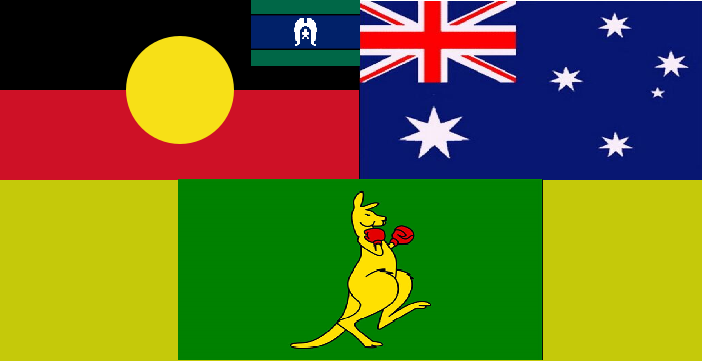
 Henry Willoughby's Social Justice Blog