Text-phobic? No worries! Checkout my video which answers the question: “What is Social Justice”?
What do I mean by social philosophy, calling myself a Social Philosopher?
I mean it in the ordinary sense of both words. Social as interactions between individuals, and Philosopher as someone who generates knowledge on a topic based on knowledge-production techniques with fundamental assumptions thereof examined.
I take social issues as a very broad scholarly and intellectual inquiry and endeavour: it is through social interactions that we may make sense of our worlds. Epistemological relations of knowledge and knowledge-production are embedded in cultural and inter-individual interactions and socialization(s). Social philosophy encompasses class, gender, race, ethnicity, sexuality, politics, history, anthropology, sociology, social science, economics, psychology, philosophy, law, and morality. The hard sciences are also governed, at least in part, by social interactions and inter-individual knowledge generation and relay and the construction of theory, novelty and utility. We pursue hard science for the social benefits it may bring us.
This is in contrast to the academic sub-discipline or field in which its ambit and scope is more narrow, and more narrowly defined as examining “questions about the foundations of social institutions, social behavior, and interpretations of society in terms of ethical values rather than empirical relations” https://en.wikipedia.org/wiki/Social_philosophy
My entries and books are intended so as to constitute an ecology of mind technologies designed in effects to augment and foster ethical consciousness and critical, flexible and dynamic thinking.
I write from a masculinist, pro-feminist perspective.
Feminism, for all its contradictions and with the varied individual and group idiosyncrasies of feminists and women, just like with masculinity, foundationally stems from the notion that women are entitled to a collective identity based on their gender, as is just and fair. I am pro-feminist for this sole (umbrella) reason: for women to be able to place themselves as individuals within a larger taxonomic category of woman/women corresponding with and moored to a social and biological reality, and thus strengthening these individual identities. This is why I identify as masculinist pro-feminist.
As part and parcel of being-and-becoming a social philosopher and author, I would like to urgently proffer a non-human centric ‘non-speciesist’ conception of society as a conceptual basis in which my philosophy operates and is animated; this is to pressingly advance a conception of ‘society’ to include interactions between all sentient creatures, and thus advancing an expansive conception of social justice, as corollary.1
These are some of the core features of my writings, and published informational sources such as the video linked above, integrally, signposting and informing my ideological positionings, in orientation.
I warmly and happily concede that social justice is a never-ending project of knowledge applied and enacted with sophisticated respectful relationship, unleashing cooperative potentials continuously, as a self-fulfilling social mandate.
Derrida pointed out the implicit but acute violence inherent in the taxonomic outcasting replete in the language concept of ‘animal‘, especially since it serves to function as excluding sentient creatures from human (non-animal) society. Similar to this, is the narrowly self-serving, and yet most often utterly impotent or a blatant Orwellian reversal of truth, distinction between ‘the civilised‘ and ‘the savage‘. For a deconstruction of the violence in the taxonomy of ‘animal‘ please see Derrida featuring in the video by John Tracey 2008, Jacques Derrida And The Question Of “The Animal”, YouTube, 25 June, viewed June 5 2025, <https://www.youtube.com/watch?v=6CAafoodASM> ↩︎
Whilst this political party is not yet official as an organisation since it has not yet been registered with the Electoral Commission SA nor with the Australian Electoral Commission, I’m in the midst of the very humble beginnings and inaugurations of a political party called The Workers and Small Business Party (‘WASBP’), and scaffolding its policy directives and ideological features. This party is to take the best of liberal capitalism and socialism. I’m dubbing this as a sophisticated-economy (‘S-E’). This is a political-economic neologism for and meaning cultivated and reconciled morality in action. It is, inter alia, an emergent, mediated template for, and embodies, ongoing, humane and careful political progression.
Herein, workers means both public and private employees. Small business is here designated as businesses having 100 or less workers employed therein.
In the short-run the aim is to foster better and fairer competition in the market through dissolving monopoly, duopoly and cartel capitalism. It is intended to have sister parties in all nations (eventually) as its internationalist directive. S-E is fundamentally about individual differences against spatial homogenisations of big business capitalism or the homogenisation in too much centralisation of state power – too much central planning in many self-professed ‘socialist’ regimes.
In the long-run, capitalist insidious classism is in the divisions between owners, managers, and workers. ‘Socialist’ insidious classism is in the divisions between planners, managers, and workers.
See my blog post on ‘What Went Wrong with the Russian Revolution’ for more engaged analysis hereon:
Some of the forces of ‘the hard left’, may be wondering why I am small business inclusive. In the short-term I am for supporting small business for six main reasons:
We need to transition to a fully participatory society through a number of gradually implementing stages;
We need the recognition that business owners of any sized business do some kinds of labour in order to maximize profits. Whilst surplus value extraction of workers’ labour happens more acutely in big business, small business owners, contrastingly on the other hand, de facto pay themselves a wage;
Small business owners risk their own capital on the market and risk bankruptcy; this contrasts with workers who may enjoy more workplace liquidity in changing jobs;
Many small business owners have taken out loans against their own property to kickstart and propel their businesses, becoming tied to the failure or success of their business; a commitment which may preclude themselves having a work-life balance, but working overtime, especially sole-traders or businesses with minimal employees/workers;
In capitalism, there is fairer competition in the market with the edification of small business as opposed to where monopolies, duopolies and cartels rake in super-profits squeezing out ‘the little person’ (small business owners in these ways) – massive corporate economies of scale preclude the social mobility of the small business owner through more passive income generation through investment and buying up small businesses. Small business owners deploy more active income generation, whereas big business owners utilize vast and acute surplus value exploitation of employees / workers to generate more passive income *or “socialism” for the rich* through more passively extracting wealth as surplus value created by workers;
Commodities in big business capitalism (not commodities in and of themselves) become homogenised, where as there would be more diversity and authentic artistry in product development and rendering of services with small business. Locales would reclaim their unique cultural identities tied to localized production as much as possible, by more honest competition through the small business ethos. Extrapolating from this, nations (with an edification of ‘the locale’) would claim their cultural imprint over most economic processes, giving a humanising territorial difference across nations.
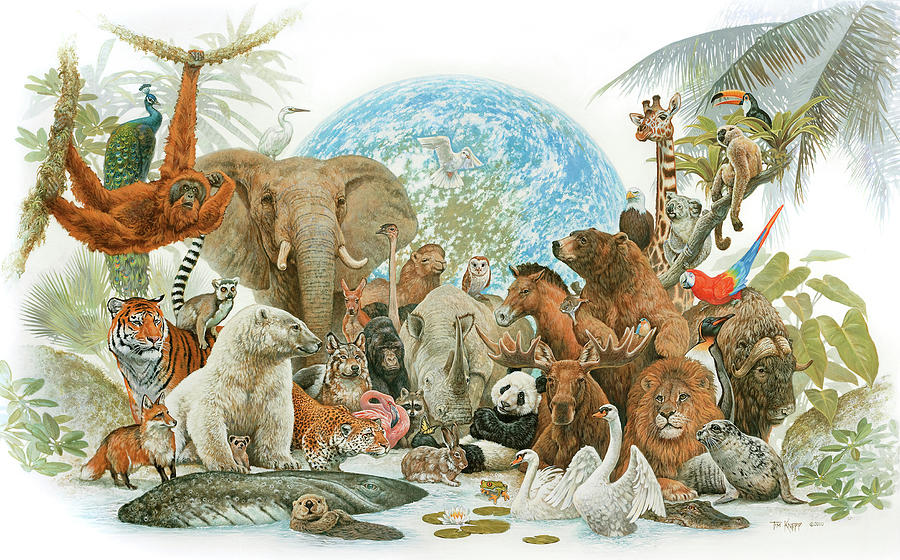
Currently unregistered with the Fair Work Commission, so not an official union or organisation, with only myself at present counting towards an unofficial and informal membership, there is an accompanying sister organisation to The Workers and Small Business Party (‘WASB Party’) also being seeded called the Alphas On Parade Union (‘AOP’ Union), inspired by the Rage Against the Machine song – Bulls On Parade, except making it gender-inclusive, for workers and small business owners (and any sized non-profit). I’m in the midst of scaffolding and fleshing out the ideological and pragmatic purview for political praxis as endowed through the union’s social and political functioning. The Union is charged with the task, along with other social justice organisations, with the goal of truly becoming great – the goal of indisputably becoming the best species on the planet, (and solar system as we know it!) 😀 😀 As a bit of fun, the Union and its members magically tap into and summon “the Alpha powers of the animal world”! Each individual member is encouraged to find their spirit animal / soul animal:
I’m also establishing a pro-feminist gendered Masculinity Collective Club (‘MCC’) for Alpha Males and aspiring Alpha Males. MCC defines an Alpha Male as one who is proficient in ability to reason, no matter what culture, ethnicity, race, class, or sexual orientation with which a given male may identify: Platonic Alphas, not Economic Alphas; caveat: some Economic Alphas are also Platonic Alphas; this definition (of Alphas) is inclusive of males and men compassionately enduring hardship, and non-ableist sacrosanctity. It’s designed to work cooperatively with Feminist Clubs and Collectives, with civil society at large, in humane gender dialectics and strengthening diverse gendered identities. The syllabus is broken down into manageable and digestible units I’m currently writing as educationals and as points of discussion on all issues affecting gendered expression and identity. I’m also establishing a reading-list. Furthermore, knowledge of masculinity is not anthropocentric and some units and recommended texts will look at and analyse masculinity in other non-human species particularly with regards to their reproductive strategies. Particularly of interest is how close human ancestors such as hominids’ and primates’ reproductive behaviours compares with masculinity in humans, who have technological and linguistic reflexivity to cooperate in an enlightened fashion. Importantly, MCC holds that reflexive enlightenment on gender by humans is paramount so that men cooperate better with men, men cooperate better with women, women cooperate better with men, and women cooperate better with women.MCC as a gendered stakeholder in humane, robust and fair knowledge-acquisition, as a mission statement, has this core ethical mandate at heart. The meta-knowledge premise by which the MCC proceeds is the equality of the sexes – non-binary inclusive, and equitable difference(s) between gendered classes of individuals under the umbrella of equality. Not better or worse, just Different!
MCC is for both transgender and cisgender men and males. In its design, routinely both factions will meet exclusively and together – an equal number of meetings exclusively and together – for both. MCC constitutes: Trans Masculine Collective Club (‘TMCC’) + Cis Masculine Collective Club (‘CMCC’), incorporating spectrum. The MCC is organised mainly around the biosocial (or indeed “social-bio“1) identity of AMAB (assigned male at birth) cis masculinists / cis men / cis males, AFAB (assigned female at birth), trans masculinists / trans men / trans males, as well as spectrum masculinity, are warmly welcome to attend meetings through membership, and/or by request and/or invitation to contribute in discussions and give presentations to the group attendees. MCC considers both trans men and cis men as sub-categories of men, as equal gendered stakeholders in society, as indeed the entirety of gender spectrum identities are inherently equal. For inclusion of feminist and/or trans feminists / trans women / trans females voices directly in MCC meetings in participation in discussions and to make presentations, this is open by request and/or invitation: this is both for feminists from feminist collectives, members and/or delegates of women’s only spaces, or any women without a collective membership in the two former organisational spaces. MCC encourages feminists to join feminist collectives and/or women’s only spaces. MCC, whilst an exclusive space in some way for masculinisms, it is not an exclusionary organisation in theory nor praxis, as it fosters gendered identity building explicitly to work in close cooperation with other gendered collectives and gendered identities in society at large. Trans and cis peoples are encouraged to form more exclusive spaces in organising and propelling collectives of their own to work with MCC and feminist collectives. Where appropriate teenage males (trans and cis) may attend tailored informational sessions on introducing the need for pro-feminism, pro-non-binary, and masculinism holistic, healthy interwoven identities, for better in good faith cooperation between the three, and a mutual strengthening.
My views are are informed by Žižek’s formulations and belief – in his words – “disagreeing a bit with [Professor] Butler”, that gendered identity is simply an endless and/or wholly unconstrained “free-field” where we can constantly negotiate and re-negotiate our gendered identities, in a ‘post-modernism’. Rather, there is a scope to persistently posit at least on some level, gendered essences. Biological realities exert a force on identity, and informs it, not as determined, but as providing a partial dialectical scaffolding on subjective gendered identity and expressiveness. That is not to say that one cannot feel, and/or be in touch with, the latent residingideal and/or archetypical and/or divine feminine, and/or non-binary, and/or masculine inside oneself. These can be dialed in at spectrums, or different percentage degrees of intensity, or switched on or off, at will, as ‘fleeting’ states of consciousness and ways of being-in-the-world, as adjunct to, and/or regardless of, the dominant gender biosocial identity of an individual. This does not repudiate the dominant gender identification of the individual, which – this dominant identity – is constituted by biology, society, and biology and society’s intermixing. ↩︎
Everyone has the right to withdraw from any friendship, acquaintance, collegial arrangement, and/or relationship. Furthermore, everyone has this inalienable and unreserved, unequivocal right to withdraw for whatever reason/s and there are no social requirements that warrant the justification of the person withdrawing in disclosing a reason or reasons for withdrawing as such. And the lack of requirement to provide justification for withdrawal to the person/party withdrawn/withdrawing from, is extended to not requiring justification for the withdrawal to any other external persons/parties. Naturally this unequivocal right to withdraw is waived when there is a professional, business, organisational, carer, and parental1 duties and this kind of duty of care to a person. This duty of care can only be voided if the person owing the duty is subject to abusive behaviour by the client/benefactor.
Parental duty of care to minors, is to care for their children at least until the age the minor becomes an adult. It may only be waived if there is severe youth delinquency / serious juvenile crime, particularly if repeated in recidivism. ↩︎
Before the more intrinsic motivators start to take effect politically, we need to respect people’s cognitive investment in original ideas (patents, trademarks, copyright, and trade secrets as intellectual property[1] (‘IP’)) and for captured market share and business value for managers and owners through remuneration-compensation: payoffs.
It is incumbent to foreground the political nature of extrinsic motivators, in a market economy, of patents for original inventions, trademarking, copyrighting original content creation and business specific confidential knowledge as valid branches of intellectual IP, and the rewards of capturing market share resulting in profits paid to owners (including shareholders) in competition, as within the design and political and economic structures of capitalism itself.
The implementation of intelligent progressive politics, means a universal basic income (‘UBI’) is feasible, as a future desired outcome. Therein, we are capable of meeting everyone’s basic needs unconditionally. This eventually means we will no longer need extrinsic motivators, such as money, through labouring in the job-market. This is made particularly more realisable, in political implementation, through the intelligent reflexive development and design of automation and artificial intelligence (‘AI’), to outsource rote labour tasks as much as possible thereto. Extrinsic motivators are more useful, indeed, at incentivising rote and menial labour. Well, they – rote and menial labour – are definitely less enjoyable particularly if the labour reduces a human being to an acutely and chronically underpaid and overworked – in a hyper-Fordist factory business model – excessive cog-in-a-wheel ‘machine’ without much productive agency in the manufacture of the entirety of the product/s the business produces – an alienating anti-Marxist nightmare – such as is the case in sweatshop labour today.
A progressive political transition[2] may look like the following:
Social Democracy;
Market Socialism;
Participatory Economics (‘Parecon’);
Resource-Based Economy (‘RBE’)
In transitioning to market socialism[3], it would be ethically compulsory, I suggest, for graded governmental handsome lump-sum payments to IP holders and business owners (including shareholders), and managerial workers, in reflection of value-added in the terms of skill-based conceptions of capitalist workplace demand and capitalist production itself. Importantly, I hold that in political movement into market socialist workplace democracy, that we begin, across all citizens, to share five types of work a lot more equably:
Rote and menial labour;
Physical manual labour;
Cognitive sedentary labour;
Emotional labour;
Duty of care labour
By the time and stage of Parecon[4] institutional implementation, the populace would be socialising for the abolition of money or credits, not just the legislative regulation of money to reign in its most anti-social excesses. A RBE[5], with an extensive legal framework for state enforced social solidarity[6], would make use of intrinsic motivators for all forms of human labour.
Intrinsic human motivators in adults are a bit like, or can be likened to, how children love to learn, play, be creative and socialise, without needing extrinsic monetary reward. Daniel Pink has made very important scholarly inroads into the science of human motivation, of which – this science – will be a topic for another blog post of mine, particularly after I have read his seminal book – Drive[7]– cover to cover!
Before concluding, I would now like to briefly return to, and flesh out, some more ethical reasons underpinning this need for compensation for intellectual property and differentiated hierarchical business positions. This is against what might otherwise amount to a ‘robber-baron’ working class or ‘robber-baron’ working class faction(s). Typically, revolutions can be based on violent envy[8].
Owners do labour, albeit sometimes a lot more conceptual than rote. This is breaking from a strict Marxist analysis: a Marxist analysis holds that workers create all the value in a business from which owners purportedly extract a surplus value made by workers materialising in profit[9]. It is natural for small business owners to work hard[10] to try to keep their prices, for goods and/or services rendered, lower than competitors, whilst simultaneously attempting at offering better quality goods and/or services, to capture more market share and maximise profits.
Furthermore in examining the role of managerial workers, they often work hard to be promoted, and as indicative through labour-actions, showcase high levels of individual self-sacrifice and/or merit. This can often be evidenced by their accrual of personal opportunity costs[11] in their commitment to workplace work-ethic and/or excellence in labour. As with many small business owners, managerial workers may intently and consciously forgo opportunities in their personal lives through an outstanding commitment to their integral roles and labour-positions in the economy at large.
As a general rule of capitalist economics, when capitalists are pursuing their narrow self-interests in business, there is also the unintentionally benefiting of others through the invisible hand[12] positive externality[13] of business markets: they made their fortunes through the pre-existing rules of the game, which lends them weighted positive ethical significance and gravity. This – conforming to legalised gaming strategies in pursuing accumulation of resources – has merit and commands respect, since therein they had economic success without directly harming others, and within a socially sanctioned matrix of economic justice with an internally consistent intra-rationality.
To conclude this blog entry, it is important to gradually socialise, through implementing progressivist stepping-stone politics, for intrinsic motivation to contribute to fellow humans, and other sentient beings, and for more pro-social behaviours. This is particularly so with the advent and streamlining of automation production and AI technologies and the convergence of these technology types with each other. However, it is imperatively noted that even with rote and menial work labour demanded and needed to be performed by humans themselves, without outsourcing to technology, we should share this as equably as possible, as a guiding social justice and political-economic principle.
References
Albert, M 2003, Parecon: Life After Capitalism, Verso, London.
Pink, D 2010, Drive: The Surprising Truth About What Motivates Us, Canongate Books, New York.
Smith, A 1776, An Inquiry into the Nature and Causes of the Wealth of Nations, Edited by J.R. McCulloch, Adam Black and William Tait, Edinburgh/London. The Institute of Art and Ideas, 10 December 2024, ‘Why Steven Pinker is against all world revolutions’, YouTube, last viewed 5 January 2025, https://www.youtube.com/shorts/uZgaUmh7imw
Footnotes
[1] Extensively, IP covers: patents are for “inventions and new processes”; trade marks as for “logos, words and other branding”; copyright as for “art, writing, music, film, and computer programs’; registered designs for “visual design of a product”; circuit layout rights for “layout designs or plans of integrated circuits used in computer-generated designs”; plant breeder’s rights for “commercial rights of new plant varieties”. Trade secrets for “any information…[a business]…would not want..[its]…competitors to have”. https://business.gov.au/planning/protect-your-brand-idea-or-creation/intellectual-property
[2] Note, this is implicitly pro a reformist – not revolutionary – mass progressive political party as a progressivist vanguard; perhaps the term revolutionary by reformist means may just qualify as apt? I believe nuanced reformist progressivism is superior to reactionary revolution, as evidenced by my writing, particularly in the entirety of my writing.
[3] See Ellerman, D 2021, Neo-Abolitionism: Abolishing Human Rentals in Favor of Workplace Democracy, Springer Nature Switzerland Ag, Cham.
[4] See Albert, M 2003, Parecon: Life After Capitalism, Verso, London.
[5] A RBE was envisioned by the late Jacque Fresco, the inventor, technocrat, and futurist. See Fresco, J 2018, The Best That Money Can’t Buy, 8th edn, Global Cyber-Visions, Venus, pp. 52, 55, and 61. In partialist departing from Fresco, I am for retaining some already entrenched progressive elements to politics, extant in already in some countries, such as for nation state territories; legal systems and legislation; law and order; separation of powers in the legislature, executive and judiciary; the rule of law; and private property to stipulate a few thereof. Furthermore, my progressivist politics includes, non-exhaustively, eventualising in small state socialisms; and small policing forces in the long-view. However, in the short view I am pro larger progressive taxation and a very well-funded and very well paid policing force to assist particularly in bringing serious crime to justice, and also particularly in dis-emboldening, and thus deterring, serious criminal acts. Note: I define serious criminal acts as acts which do serious harm to another or others.
[6] This is at the least a contingency catering for the existence of the irrevocable pledge to ‘absolutist evil’ by individuals and/or groups, in a perspective that is somewhat Manichaean, herein adapted to politics.
[7] Pink, D 2010, Drive: The Surprising Truth About What Motivates Us, Canongate Books, New York.
[8] On this point please see Professor Steven Pinker on revolution: ‘Why Steven Pinker is against all world revolutions”, last accessed 5 January 2025, https://www.youtube.com/shorts/8up6jWpSztU
[9] See Marx, K 2013, Capital: A Critical Analysis of Capitalist Production, Wordsworth Editions Limited, Ware, Parts 3-5, pp. 120-374.
[10] I like the social justice conception and idea of “the travails of small business”! It is very apt, I find.
[11] Opportunity cost, of any action, as an economics’ concept, can be understood as “the highest-valued alternative forgone” McTaggart, D, Findlay, C and Parkin, M 2010, Economics, Pearson Australia, Sydney p. 35.
[12] Smith, A 1776, An Inquiry into the Nature and Causes of the Wealth of Nations, Edited by J.R. McCulloch, Adam Black and William Tait, Edinburgh/London, p. 246.
[13] “An externality is a cost or a benefit that affects someone other than the seller or the buyer”, see McTaggart, D, Findlay, C and Parkin, M 2010, Economics, Pearson Australia, Sydney, p. 117. Here I mean it as a positive externality on society, but also I note that the seller and buyer benefit too, naturally.
Social Mobility, Social Justice, and Social Equity
‘Social mobility’, social justice, and social equity are ends in themselves, and are direly needed in the acutely classist and racist1 global late capitalist mode of production; insidious inequality exists between nations and between individuals within nations. Below consists of some strategies in social justice and social equity practice and/or reforms.
Tertiary Education
Tertiary education should be made free to all adults. This is because it is only fair to grant equal opportunity — an anti-class effect, and education in general has enormous personal benefits as well as great and manifold positive externalities2. An externality is “a cost [negative] or benefit [positive] to a third party as a result of someone else’s actions”3.
Gender Quotas
For equity on gender, I propose the exigency for extensive and comprehensive gender quotas to be deployed across industry, vocation, profession, and academic study and specialisation. This is to eschew gender competition between men4 andwomen5and equitably better equalise gender roles.
Scholarships
We should especially grant tertiary scholarships, to peoples from economically disadvantaged demographics, into university courses that have high-demand, competitive or limited student enrollment placings. Race, ethnicity and class, are all factors in which these DEI (Diversity, Equity and Inclusion) scholarships should be granted. Informing of granting these scholarships should be myriad sociological theories such as class and racial exploitation. Thus, neo-Marxist and CRT (Critical Race Theory), should help inform the granting of tertiary scholarships, but not as totalising theories, as truth is predicated and premised on individual difference.
Cognitive Development
Other ways to foster better scholarly inclusion are distributing and prescribing high-grade pharmaceutical cognitive enhancer nootropics to under-privileged adults6 and state-funded academic mentoring. Great care must be taken not to abuse nootropics, and we should note that they do not expedite a greater intelligence from consumption; rather, they only enhance mental focus and vigilance over longer periods of time, in study and reading7.
The racist realities of global capitalist exclusion, can be conceived of as under the umbrella of class(ism). Neoliberal, so-called ‘political correctness’ and identity politics, gives proliferating ideology of racial, but not class, forms of decolonisation (some anti-racist objective gains and some illusory gains). However, without tackling class, we will never disentangle racism from its reproduction under capitalism, and thus we need to be in the position to exorcise racism, (more) ‘structurally’, through genuinely progressing towards achieving post-capitalist democratic and participatory socialism. ↩︎
My conception of an externality is a cost or a benefit that affects someone [or ‘society’] other than [perhaps reductionist reason(s)] of a person’s choice and/or action or from the action and mutual consideration of the parties to a contract. ↩︎
This is conceptually including both cisgender and transgender men. ↩︎
This is conceptually including both cisgender and transgender women. ↩︎
See Saniotis, A 2013, ‘Remaking Homo: ethical issues on future human enhancement’, Ethics in Science and Environmental Politics, Vol. 13, No.s 15-21, pp. 17 and 18. ↩︎
See Finding Genius Podcast, 20 May 2022, ‘Exploring The Mind-Boggling History Of Human Evolution With Arthur Saniotis’, YouTube, 3:16-26:32 https://www.youtube.com/watch?v=TaQzvzXUYxM↩︎
There are six principal reasons for the failure of the Russian so-called ‘socialist’ state and government:
Soviets – workers’ councils – were dissolved and dismantled by Lenin;
The Soviet Government lacked a separation of powers at the federal government level: no independence of the three branches of government – the Legislature, the Executive, and the Judiciary;
Totalitarian one-party closed system – no possibility of competition between parties in elections;
The abolition of private property; and
Large and inflated state: too much state power, bureaucracy and central planning, and the lack of a smooth and comprehensive progressive political transitionary plan for implementation.
1. The truest and most foundational building block of libertarian socialism is rank-and-file workers’ councils. These were called The Soviets in Russia before Lenin abolished them in favour of more political centralization of powers to the government. Chomsky gives an incredibly important speech on what socialism really is – workers’ self-organization, and how the biggest two propaganda ‘institutions’ of the globe – the U.S. and the U.S.S.R wanted to claim that the USSR was socialist when its number one precondition thereof – the self-organization of workers – was missing! The YouTube video is linked below of Chomsky’s incisive speech:
2. “In the Soviet era the communists saw the principle of separation of powers as a ‘bourgeois fiction’. It didn’t fit in the Soviet ideological system, as the Soviet state proclaimed to do everything in the exact and appropriate way for the wellbeing of the working people and because of that there was no need for separation of powers. In addition to that the Soviet Union was a one party state and even the theoretical anchorage of separation of powers in the Soviet Union would have harmed the totality pretension of the party. Because of that separation of powers was nonexistent in the Soviet Union” (Henderson in Hertle 2020, p. 2).
This meant centralized Executive control under the General Secretary, who controlled police (Cheka) and could institute martial law (Red Army). This is in contrast to the United States of America’s political design by its founding fathers which has proper checks and balances on the use of Executive power and prohibits policing by military.
3. In Soviet Russia, there was “the forcible dissolution of the Constituent Assembly (the multiparty national parliament) as early as January 1918” (Ecyclopedia.com 2018).
There should be little / minimal barriers to inaugurate and create a political party capable of contesting elections. There should not be the placing of limits on the legality of official inaugurations of other parties. This is to prevent a forced monopoly (like Russian ‘communism’) and a two-party cartel system (like Western capitalist ‘representative democracies’) (see Miragliotta, Errington and Barry 2010, pp. 189, 196-9, 202-11, and 281). Do we need a multiparty system for political diversity? Well, at the least there should be no suppression nor automatic exclusion of other parties. If one party wins all the votes or most of the votes, then that is fair competition – the point is that the system should never be closed off to potentially rival political parties.
4. We need a political system which reflects the people’s right to own and claim ownership of things – not state capitalist dispossession as in what occurred in Leninism and Stalinism in Russia. The police – as an important part of the Executive branch of government – derives one of its key functions in protecting private property of citizens. Private property – when fairly acquired – is a progressive political-‘technology’ and gives humane social mores in protecting / upholding the ownership of possessions and assets. Private property is the humane inherent right of each individual / citizen to exclude others from use of and/or interference with their possessions and assets.
5. After freehold land distribution and allocation for all adult individuals, we need socialism with a small state and to eventually abolish money for authentic participatory political action, exorcising social and political and economic corruption. We should have a resource based economy (Fresco 2018) but one with a system of nation states that have sovereignty but cooperate with each other for fair resource distribution and equalizing wealth levels for citizens across nation-states. (See my blog post ‘Against abolishing nation states’ https://henrywilloughbyssocialjusticeblog.com/2020/10/17/against-abolishing-nation-states-as-the-authentic-sites-of-proletariat-power/).
There needs to be instituted decentralized decision-making to offset state power. So, anarcho-syndicalist institutions could be implemented. Furthermore, in addition to workers’ councils and consumers’ councils, we may want to utilize a system of direct democracy in the vein of Bookchin’s (2015) conceptualizations, and voting on ideas and equally negotiating input into workplace work delegations and in the production of goods and renderings of services, could be enacted. For a careful and comprehensive stepping-stone plan for transitioning from capitalism to libertarian socialism see my blog entry: https://henrywilloughbyssocialjusticeblog.com/2018/05/02/prison-abolition-examining-gender-competition/
Most fundamentally, for these institutions to operate authentically the precondition is a well enlightened populace. Probably at least a third of the population need to be trained polymaths who would oversee the humane functioning of political institutions and social practices.
Bibliography
Bookchin, M 2015, The next revolution: Popular assemblies and the promise of direct democracy, Verso Books, London.
Fresco, J 2018, The Best That Money Can’t Buy. Beyond Politics, Poverty and War, The Venus Project, Florida.
Henderson, J 2011, The Constitution of the Russian Federation: A contextual analysis, Constitutional Systems of the World, Bloomsbury, Britain.
Hertle, F 2020, ‘The Russian Model of Separation of Powers. Constitutional grounds and practical realization’, GRIN Verlag, Munich.
Miragliotta, N, Errington, W, and Barry, N 2010, The Australian Political System in Action, Oxford University Press – Australia and New Zealand, South Melbourne.
‘The 1%’ – a populist vernacular for the contemporary oligarchical globalist ruling class, dubbed in academic terms as the Transnational Capitalist Class (‘TCC’) (Sklair 2001) – does not care for the vast majority of women. Instead, they see them as slaves and a means to their end(s). It’s no secret that they outsource cheap labour to third world and developing nations, where many women find themselves trapped in sweatshop labour slavery, working long hours and in excessively repetitive dehumanizing work for an absolute pittance. In Western countries they disingenuously ‘support’ the liberal feminist movement, not for its genuinely progressive political and social features, but for entirely the wrong and immoral reasons. Some of these ‘reasons’ are to get more of the populace in ‘the productive’ workforce to effectively double taxation income streams and GDP; to overwork twice the populace than previously; to reproduce the worker at half the cost, since real wages have been in decline; to put strain on and undermine the nuclear family unit; to get children from couples into state care earlier to undermine familial and home education; and to create gender hostility and more pronounced gender competition in forcing women to compete against men in the job market instead of enacting gender quotas in industry, profession, vocation, and education. This happens whilst the male dominated TCC’s women do not have to be in the workforce and passive income streams generated allow for family time and informal familial education for their offspring. This has the combined effect of decreasing social mobility whilst economic and socio-economic inequality increases through monopoly and cartel capitalism – and increasingly the erosion of liberal capitalism and in its place, the implementation of state capitalist political and economic architecture. Let’s not forget that the TCC being male dominant is disproportionately responsible for skewing the gender pay gap, more so than any other group of people.
The TCC is “the global social stratum that controls supranational instruments of the global economy such as transnational corporations and heavily influences political organs such as the World Trade Organization.” (Wikipedia)
Sklair (2016, p. 499) finds there are four fractions to the TCC:
Those who own and control the major transnational corporations (TNCs) and their local affiliates (corporate fraction);
Globalizing politicians and bureaucrats (political fraction);
Globalizing professionals (technical fraction);
Merchants and media (consumerist fraction).
Saleam explains the Australia-specific and internationalist contemporary rise of the TCC:
“the State has been progressively recast after the 1975 ‘putsch’ [in Australia], with integrated policies to achieve economic-internationalization, apply liberal-authoritarian methods against opposition…to develop a ‘Transnational Capitalist Class’” (1999, p. 5)
We should note that neoliberalism is the TCC’s dominant (outward public) ideology, but it is fast allying itself to state-capitalist measures (inward private-covert) as political power is becoming increasingly centralized and despotic in Western countries.
The TCC reproduce a politics of exclusion and disempowerment. It’s not that I don’t respect the 1%’s thirst for knowledge, it’s the totally immoral ways in which they use and deploy their accrual and capitalizations in knowledge. Increasingly, as is intended, their political maneuvering is becoming more despotic by the day as liberties are ‘traded’ for heightened ‘security’ and ensuing centralizations of political power. This is all made possible through an utterly disgusting level of economic and socio-economic inequality and disparity. A disparity which is severe, perverse and socially and politically corrupting, and thoroughly criminal: the condemning of peoples – including most women – to acute exploitation all over the world is not victimless, nor morally neutral, and not legitimize-able (neologism) phenomena.
Gender and class consciousness is absolutely integral here – even for the first world middle-class whose wealth is fast eroding – under real threat. The elite are power-hungry and we should not project our morality (erroneously) on their psychopathic quest for world domination. This elitist quest is absolutely not benign, and is as old as ‘civilisation’ itself. The endgame is an imperial state-capitalist corporatocracy centralized world government where finance capital, as the dominant faction of capital, rules all over the world with a docile global populace of workers – micro-chipped, with no real social mobility on offer. Elites will augment their own cognitive powers through splicing their genes with animals for different kinds of new sensory knowledges and intelligences, and for enhanced memory capabilities, as well as nanotech and biotech brain enhancements, and technological techniques in cloning and life-extension. All these will be ȕber-expensive biological enhancements / technologies simply not affordable for the masses of people. A new insidious classism, in the vein of Brave New World, will fracture the human species along biotech lines, if the masses do not organize themselves into rank-and-file workers’ councils with an emancipatory political party – the truest organs of libertarian socialism, see my blog post on why socialist countries – through the lens of the Russian revolution – have failed in constructing a genuinely socialist politics and social justice.
Does and/or did ‘the 1%’ know, see and/or call themselves by this term as their numerical-fractional organisational principle/thesis? Did the public simply just catch on? Food for thought! 🤠
Rise up!
References
Saleam, J 1999, ‘The Other Radicalism. An Inquiry into Contemporary Australian Extreme Right Ideology. Politics and Organization 1975-1995’, Department Of Government And Public Administration, University of Sydney, Australia.
Sklair, L 2001, The Transnational Capitalist Class, Wiley.
Whilst psychiatry has a dark history, it has come a long way from lobotomising treatment resistant patients in modern psychiatric-medical pharmaceutical interventionist glory. It has given a life-line to many people in need of chemical reorganisation of neural networks and cognitive patterning in the brain. However, I have some informed and reconciled ideas for improvement herein.
Main body of argumentation
Whilst I do not consider myself as having an anti-psychiatry disposition per se, four ideas for improvement are:
Currently, even if you’re treatment responsive to medication intervention(s), you’re still labelled as having a mental disorder, eliciting an unwarranted stigmatisation. Instead, I would recommend a finding of what I have termed and conceptualized as a medicoza. This means that treatment responsive people are no longer considered to have a mental health condition, as their cognitive patterns have been restored to be within a normal threshold of functioning;
A psychiatric test for a delusion is if beliefs held by an individual is non-understandable to same cultural peers of similar cultural backgrounds. This is moralising the group over the individual, and potentially punishes those who go beyond their cultural indoctrination. For a positive finding of a medical delusion seemingly ‘bizarre’ beliefs must be entangled with and implicated in acutely harmful behaviour;
More nuanced distinguishing between physicalist-materialist diseases of the brain, with conditions that are socially caused, and in some instances an overlap between the two, is paramount, I argue; and
Detainment, discussed here of the medical variety, is a serious deprivation of a person’s liberties and is against a person’s will, as well as is forced medical treatment (with or without psychotropic medication). Just as with penal incarceration, ‘medical detainment’ would be more socially robust in requiring a consensus of psychiatrists, a jury of ordinary citizens, along with an anthropologist, to produce an authenticated forced detainment order of a person. The forced medical treatment of pharmaceutical drugs also should require the same burden of proof discharged through unanimous findings of the aforementioned panel, but it should also require intensive enforced psychotherapy – moving from moderate to intensive psychotherapy intervention as needed – before resorting to pharmaceutical psychotropics.
Rationale and elaboration on the first idea for improvement:
I have written extensively, in publications, re the need for a new category of medicoza, for a ‘labelling’ of treatment responsive persons. Herein persons who presented with psychiatric symptoms that are subsequently resolved through appropriate prescribing of medication, who have been compliant for, say, at least 6 months or a year, are not taxonomically lumped in with patients who are not treatment responsive and are thus unnecessarily burdened with psychiatric stigma and a lack of complexity in the distinction between the two categories treatment responsive and treatment non-responsive.
Rationale and elaboration on the second idea for improvement:
On the second point for improvement within and of modern psychiatric medicine, the (bio)medical establishment, of which psychiatry is a part, needs to encourage ‘the bona fide anthropologist’ in individuals. This is the mandate for the humane adoption of the humane aspects of a foreign culture into one’s own identity and informal and formal philosophical individual disposition(s). This is done through immersion in other cultures, in good faith, to respectfully adopt humane aspects of/to foreign culture, not appropriation. This is to promote bona fide cultural synthesis and humane contagion of memes1 (Dawkins 1976). This necessarily and imperatively involves, and individually and socially mandates, a deconstruction of culturally-centric judgement and facilitates the deep and engaged study of other cultures – particularly through scientific immersion in ethnographic fields – i.e. the bedrock methodology of scientific anthropology, and/or reading and absorbing oneself in other anthropologists’ ethnographies. This is the scientific study of culture(s).
Further to this, a culturally messy conception of delusions resides in the definition, in the DSM-5-TR, that (medical) delusions, with the individual (not group psychosis) as its locus, is “fixed beliefs that are not amenable to change in light of conflicting evidence” or “as a fixed, false belief that is firmly maintained and resists correction by overwhelming evidence and rational argument” (Frances 2017, p. 10). Let us lay out, as an outset, pertinent and bona fide thought-experiments, incumbent on everyone for reproducing a liberating, pluralist, humane politics of truth-perspectives:
The medical establishment could diagnose Christians as having a medical delusion for their belief that (the historical) Jesus was the only son of God. Certainly, the purported historical Jesus himself would have been medically ‘deluded’ by today’s psychiatric diagnostic criteria (but I argue even this would be erroneous since the requisite harm component would be missing!). So to some psychiatrists, Christians could be considered to believe in the same ‘deluded’ religious metaphysics as historical Jesus, as well as the psychiatric charge by some that Jesus himself was mentally ill! What we are dealing with here, is a deductive purported group/cultural delusion: the vast majority of Christians, however, in their faith in Jesus’ purported lineage as God’s only son, are not medically delusional, and some may not even be culturally delusional – it depends greatly on their ability to reconcile ideas around philosophy of historical and psychoanalytic truth. Against a finding of medical delusion for the vast majority of Christians, this vast majority are able to live productive lives in work and personal relationships – i.e. the harm component of a medical delusion is absent in these people.
As an aside note and sideways reflection, to my personal knowledge, in one, or some sense, I believe that it is a partial(ist) truth that Jesus was a plagiarism of Pagan and even ancient Egyptian predecessors and may have been based on an astrological allegory. Emperor Constantine sought to make Christianity the official religion of Rome at least partially, likely, from his perspective, to cynically instill a slave-ethic in subordinated classes of people who would ‘happily’ toil in impoverished conditions believing they would get a ticket to a glorious afterlife: an intended politicized perversion, in trickery, of the Biblical verse – “[b]lessed are the meek, for they shall inherit the earth”. This is crude and sinister politicization of religious principles, for expediency of a repressive, imperial, ecclesiastical oligarchical power over people. Interestingly, if we apply and annex some of the philosophy of the greatest psychiatrist to ever walk to the earth – Dr Carl G. Jung, ‘a community of faithful believers’ (Žižek) in Christ may summon powers latent in the collective unconscious, surfacing from collective faith-based evolutionary pressures on meaningful identity phenomena: Jungian archetypes, through these pressures, may surface or register at the level of the personal unconscious or even, but more rarely, at the level of personal consciousness; perhaps even a person walking the earth today may embody, to some extent, the Christ archetype23 – traced back to the power of the faithful community of believers. This theory is of an awesome kind of philosophical self-fulfilling prophecy – linking in with a direction of evolution. To wrap-up and in simpler terms: the power of the faithful believers may actively manifest the (Christ) archetype at the level of embodied identity, surrounding an individual, but not as a totalising identity: i.e. this individual would have a surplus of identity in name, familial and upbringing, for example, resisting a totality of the residing archetype.
It is also interesting to analyse and deconstruct the purported revelatory religious experience of prophet Mohammad. He purportedly believed he was visited whilst in a cave by ‘angel Gabriel’ who disclosed monotheistic God’s law. He went on to found Islam as a religious, political and cultural leader. Subsequently over 25% share of the global population affiliate themselves with Islam (Statista 2022). Is this, according to a psychiatric secular bias?, group psychosis inspired by an individual’s psychosis? Similarly with Christianity, I don’t think psychiatry has cause to intervene in the vast majority of cases in the freedom to choose and appropriate religious meaning around Islam. In all fairness, and as logical, is it not then a corollary that a person or persons with so-called ‘grandiose’ religious beliefs and/or experiences found new religions? I think so (if the acute harm component to substantiate a medical delusion is absent!).4
Unfettered meaning-making is the authentic social goal. Medical intervention can only legitimately proceed on the basis of an acute harm caused by insanity.
For some more contextualising information, please see Professor Sapolsky’s interesting take on schizophrenia (sustained psychosis) symptoms:
For some other notable intellectual commentators on psychosis and schizophrenia, please see Jung and Bateson’s insightful works thereon. Jung believed psychosis to be an invasive flood of unconscious processes into the conscious mind, whilst Bateson drew attention to a social causation thereof.
Rationale and elaboration on the third idea for improvement:
Considering psychosis, schizophrenia (lingering psychosis) and schizoaffective disorder (lingering psychosis causing manic and/or depressive states and/or behaviour(s)) as case-studies to elucidate this third vital insight for improvement and amelioration, let us distinguish ‘diseases of the brain’ versus social causation, and the overlap between the two in some cases. The vast majority of incidence in initial presentation of psychosis, schizophrenia and schizoaffective disorder are caused by chemical and/or anatomical physicalist deficiency and dysfunction of the brain. However, as Bateson (1972) argued, chronic subversion of the logical type in human communication (and mammalian communication in general) can be actuated against an individual who is a victim of sustained double binding (exposure to conflicting injunctions in oral and kinesic communicative-exchange) who also cannot escape the field – typically dependents who are subjected to covert abuse by an age-privileged or several age-privileged members of the family unit. If a covert familial abusive dynamic is found by a psychiatric medical professional, authoritative power(s) must be invested in the psychiatrist, to remove the victim from the field of abuse in which they were previously trapped, along with the power to medicate; both of which may be needed to restore ability to discern and act upon the logical type in communication.
Rationale and elaboration on the fourth idea for improvement:
The panel must unanimously agree there is the need for medical detainment through assessing if there is cognitive behavioural patterns in the accused6 whereupon there is a nexus from this to seemingly bizarre thoughts and/or delusions which are causing acute harm to the accused and/or to other people by the accused. Other criteria could be assessed as relevant in symptoms of excessively tangential thinking, excessive loose associations, and chronic subversion of ability to discern the logical type in communication; these must also be sufficiently acute in harm as to require medical detainment. Hallucinations (auditory, visual and/or tactile) are very serious symptoms in that it is most probable that they need medical detainment and forced medical treatment using pharmaceutical psychotropic(s).
The jury of ordinary citizens and anthropologist on the panel guard against medicine or medical science being used in ways that are particularly and excessively sociocentric7 which would also, in some cases, genuinely qualify the charge of cultural imperialism8, as manifesting. Psychiatry as a mechanism of cultural imperialism would be the imposition of established political conformity as a hegemony against the culture of genuine and free-thinking. Laudingly, although rather crude, especially in isolation, there is an extant psychiatric mechanism protecting discrimination against non-Western groups who have beliefs and meaning-generation radically different from Western conceptions: “delusions are deemed bizarre if they are…not understandable to same-culture peers” (American Psychiatric Association 2013, p. 87).
Anthropologists are professionals trained in the detection of sociocentric bias, through the scientific method of immersion in other cultures suspending native cultural judgement and bias to arrive at deep and thick understandings of the cultures they study through fieldwork and then leading to their ethnographies. What anthropologists have uncovered is a radically different pool of meanings throughout the world and populations, many of which have high social functionality; in many cases these are residing outside of the some intellectual tendencies of Western hard-science, often deployed as a (rather dogmatic) yardstick of verifiability9, which may, in many cases, be too insular and/or stifling. But all this may be in the process of changing attitudes to the so-called ‘supernatural’. For example, there has been increasing interest in the putative phenomenon of non-local mind which is “the [purported] ability of one mind to influence another mind from a distance” (Henneberg and Saniotis 2016, p. 107). These forms of putative intuitive modes of consciousness involving non-local mind, are ‘normal’ to many Indigenous cultures for instance. Further to this, some renowned evolutionary psychologists contend:
“It may be time to…grant human intuition a little more respect that it has recently been receiving. The evolved mechanisms that undergird our intuitions have been subjected to millions of years of field testing against a very rich and complexly structured environment” (Cosmides and Tooby 1996).
Within Western-centric psychiatry, with the notable exception of Dr. Jung who pointed to the intertwining of rational and intuitive modes of human consciousness and its dialectical interplay with unconscious effects and forces, there tends to be an over-emphasis on rationality. This ignores the more Dionysian aspects to human being-in-the-world which resist or preclude our rational faculties and our species exclusive ability and penchant for reasoning. The province of intuitive modes of being are often-case welded to ‘the supernatural’ in cultivating religious and spiritual knowledge and theological experience(s). To quote the title of the anthropologist of neurotheology Dr. Michael Winkelman’s books: Supernatural as Natural. The supernatural is natural in our species, which exists aside from rationality as well as intertwining with it in other instances. Failure to acknowledge this amounts to an excessively narrowly materialist and debilitating and disempowering philosophy of humanity and its virtue. The rational and spiritual both need cultivating, both on their own and in reconciling their inevitable overlap. For example, one could have knowledge of God a priori (“theoretical deduction rather than empirical observation”) (Oxford Languages). If this – overcoming the estranging of the rational and the spiritual and without denouncing the latter – is cultivated, it is very good and nourishing for the human soul.
What is needed is the uninhibited freedom of meaning-making in cultural subjects:
“These intuitive (non-rational) unconscious and precognitive modes of thought…[are]… important for spiritual, religious and shamanist magico-religious freedom of cultural subjects in the micro and macro meaning-making processes, and [importantly] trigger a release from monophasia” (Willoughby 2020, p. 40).
Monophasia can be defined as the political inculcation of obedient, excessively repetitive rote labour, and over-work, social fact10 (Durkheim 1895). This has overlap with the extant phenomenon of cultural imperialism. This is caused by the colonial and capitalist social norms and modes of production, alongside and within which psychiatry has manifested. This – monophasia – is linked to the surplus-value11 exploitation of workers (see Marx 2013, pp. 120-127; 146-152) particularly by big business and wealthy investors. We want and need more emphasis on personalized, not sociocentric, psychiatric practice and praxis, where the edification of polyphasic and enchanted ways of being occurs more seamlessly within Western society. Ergo, psychiatry must shrug off its monophasic biases. Westerners must be allowed, free from psychiatric over-diagnosis, to adopt and embody the cultivated spirituality, that may be classed within a polyphasic episteme12, of many non-Western cultures, for individuals in genuine cultural synthesis.
Regarding the humanizing interplay between rational and intuitive modes of consciousness and meaning-making:
“These processes inevitably involve a dialectic between and integration of Apollonian (rational) and Dionysian (intuitive and socio-emotional) modes of thought and consciousness” (Willoughby 2020, pp. 39-40).
Thus, without an acute harm component, legitimate psychiatric practice must not impede or impinge upon the exigency for freedom and liberty in individual meaning-making and cultural interplay. Somewhat extraneous from this article, for more development on the double source of the Greek deities – Apollo and Dionysus – and their dichotomous relationship, see Nietzsche (1999, pp. 119-138).
The imperative for this panel is especially incumbent given there is, in a monetary economy, more demand for a psychiatrist or psychiatrists labour the more diagnoses they make. So checks and balances on psychiatric power need serious attention and redress. The financial kick-backs from pharmaceutical companies for prescribing or forced medicating certain drugs is currently quite low in Australia (where the author lives). A study found “2.3% of Australian psychiatrists received a payment from a pharmaceutical companies” (Forbes et al 2023). This is reassuring. However, in the United States “[o]ver half of active psychiatrists (55.7%) received some form of payments from pharmaceutical manufacturers” (Rhee and Wilkinson 2020). This would point to a higher rate of medical corruption in the United States, with more perverse incentives apparent.
Conclusion
These are some rationalised and carefully reconciled ideas for the progression of psychiatry as an engaged humane science, and integral branch of modern medicine. Greater cooperation between psychiatric medical professionals and their clients and patients, as a part of subject-subject relations in medicine generally – will pay a great social dividend to all!
Referencesand Works Consulted
American Psychiatric Association 2013, DSM-V (Diagnostic and Statistical Manual of Mental Disorders, no. 5).
Bateson, G 1972, Steps to an Ecology of Mind, The University of Chicago Press, Chicago, pp. 244-278.
Cosmides L, and Tooby J 1996, ‘Are humans good intuitive statisticians after all? Rethinking some conclusions from the literature on judgement under uncertainty’, Cognition, Vol. 58, No. 1.
Dawkins, R 1976, The Selfish Gene, Oxford University Press, Oxford.
Durkheim, E 1895, The Rules of Sociological Method, Simon and Schuster.
Forbes, M, Bhowon, Y and Parker, L 2023, ‘There ain’t such a thing as a free lunch: Pharmaceutical company payments to Australian psychiatrists’, Australian Psychiatry, December, Vol. 31, No. 6.
Frances, A 2017, Twilight of American Sanity. A Psychiatrist Analyzes the Age of Trump, HarperCollins Publishers, New York.
Henneberg, M and Saniotis, A 2016, The Dynamic Human, Bentham Science Publishers, Sharjah.
Rhee, T and Wilkinson, S 2020, ‘Exploring the Psychiatrist-Industry Financial Relationship: Insight from the Open Payment Data of Centers for Medicare and Medicaid Services’, Adm Policy Ment Health, Vol. 47, No. 4.
Willoughby, H 2020, The Archetype of Psychotropic Shamanism and the Morality of Group-Bonding and/or Healing, Lulu Enterprises, Raleigh.
Winkelman, M 2015, Supernatural as Natural: A Biocultural Approach to Religion, Routledge.
Footnotes
Meme: “an idea, behaviour, or style that spreads by means of imitation from person to person within a culture and often carries symbolic meaning representing a particular phenomenon or theme. A meme acts as a unit for carrying cultural ideas, symbols, or practices, that can be transmitted from one mind to another through writing, speech, gestures, rituals, or other imitable phenomena with a mimicked theme. Supporters of the concept regard memes as cultural analogues to genes in that they self-replicate, mutate, and respond to selective pressures”. Wikipedia↩︎
Jungian archetypes: “universal symbols or patterns are are present in the collective unconscious of all humans [and may surface into a person’s conscious mind]”. Structural Learning↩︎
Further synthesis of Jungian archetypes: “these archetypes are influenced by evolutionary pressures and manifest in the behaviours and experiences of individuals”. Wikipedia↩︎
Note: for my personal views on Christ and the Christ archetype, please free to pick my brain over email, phone and/or coffee if you are within a reasonable proximate distance, in a geographic space-time compression, and/or for forging a more explicit political allegiance, generally. ↩︎
The Accused is the correct terminology since a diagnosis of insanity is a bad thing for the person – i.e. they are being accused of being something undesirable. Like a judicial finding of innocence/criminality, the person medically accused is presumed well before unwell. ↩︎
Cultural imperialism: “the imposition by one usually politically or economically dominant community of various aspects of its own culture onto another nondominant community. It is cultural in that the customs, traditions, religion, language, social and moral norms, and other aspects of the imposing community are distinct from, though often closely related to, the economic and political systems that shape the other community. It is a form of imperialism in that the imposing community forcefully extends the authority of its way of life over the other population by either transforming or replacing aspects of the nondominant community’s culture”. Britannica↩︎
It – hard-science – is dogmatic if intended to be used as the only yardstick of truth. ↩︎
Social facts: “values, cultural norms, and social structures that transcend the individual and can exercise social control”. Wikipedia↩︎
Surplus value: in Marxian economics surplus value is “the difference between the amount raised through a sale of a product and the amount it cost to manufacture it”. Wikipedia↩︎
Episteme: “the “underground” grid or network which allows thought to organize itself. Each historical period has its own episteme. It limits the totality of experience, knowledge and truth, and governs each science in one period” (Horrocks and Jevtic 2009, p. 65). Here I mean it more culturally specific, rather than ‘historically’ relative. ↩︎
From my research, through finding a gem informed commentator, Professor Robert Sapolsky, I somewhat luckily stumbled upon what could be a solution to the trans youth medical intervention debates. Sapolsky is an esteemed neuro-biologist hailing from Stanford University. He has published some compassionate and scientifically rigorous findings, that direly need to be popularised for an informed essential crafting of a workable ethic regarding gender affirmation care.
At an outset, it is incumbent foregrounding to note that there is an extant dichotomy of transgenderism, which is good and productive to think with:-
Brain-based transgenderism; and
Socialised transgenderism
Both of the above are worthy and legitimate forms transgenderism. Quoting from Sapolsky’s seminal book – of which I am a proud owner as it occupies an esteemed and cherished place among books in my bookshelves – Behave: The Biology of Humans at Our Best and Worst on brain based transgenderism:-
“Remarkably, studies have examined brains of transgender individuals, concentrating on brain regions that, on the average, differ in size between men and women. And consistently, regardless of the desired direction of the sex change and, in fact, regardless of whether the person had undergone a sex change yet, the dimorphic brain regions in transgender individuals resembled the sex of the person they had always felt themselves to be, not their “actual” sex. In other words, it’s not the case that transgender individuals think they’re a different gender than they actually are. It’s more like they got stuck with the bodies of a different sex from who they actually are.”
Sapolsky, R 2018, Behave: The Biology of Humans at Our Best and Worst, Vintage, London, p.215n.
This brain region of swapping dimorphism in (brain-based) transgenderism has been identified as the the “bed nucleus of the stria terminalis (‘BNST’). Please see Sapolsky’s integral and eye-opening video lecture presentation below:
It follows then, that a qualification for puberty blockers and/or gender affirmation surgery/surgeries should only be applicable upon a finding of this swapping of dimorphic size of the BNST in an individual. Is this not the enlightened middle-way between anti and pro puberty blockers and gender affirmation measures regarding trans youths? Is brain-based transgenderism detectable in scan/s? This I do not know (yet)!
Why aren’t politicians making claims on this matter, citing his integral and groundbreaking works? It’s both alarming and depressing we are not finding rationality, not severing through the unsubstantiated extremist anti or pro polarised positions, on particularly trans youths.
For another fantastic and interesting online conference/chat regarding transgender neurobiology is given below:
For the sheer complexity of variables around gender, and its resulting spectrums, please see the informative video featuring inquiring scholars and activists dialectically exploring this often misunderstood and overly simplified topic, with Sapolsky himself, in an accessible, non-elitist reachable dialogue design:




 Henry Willoughby's Social Justice Blog